Book Review: Diana & Nikon by Janet Malcolm

In her collected writings on photography, New Yorker staff writer Janet Malcolm accomplishes what many critics set out to do but few achieve. She illuminates much that is true about the medium in a unique, eloquent voice that is piercingly intelligent and bluntly honest.

Although this collection was originally published forty years ago, the passage of time has not lessened its impact and relevancy. These pieces were originally published in The New Yorker, along with The New York Review of Books and The New York Times, and they are presented here in chronological order. (The expanded edition ranges from 1975 to 1996.) There are 16 essays total—11 in the original, plus 5 for the expanded edition. Most start out as reviews of specific books or exhibits, using those as jumping-off points to examine larger questions.

One of the pleasures of the book is seeing her ideas and views develop and evolve over the course of the book. Each question she asks leads her to another deeper, more complex question. (“Questions are what matter, of course,” Malcolm writes.) Recurring themes include the complex and somewhat symbiotic relationship of painting to photography, the fundamental nature of photography and its ability to capture “truth,” issues of form and content within the context of photography, and the struggle to situate photography within the arts.

Malcolm expresses little interest in the politics of photography. She doesn’t traffic in holier-than-thou writerly critiques of photographic practices. Nor does she rhapsodize about the power of photography to bear witness or bring about social change. She’s much more interested in exploring the connections between Abstract Expressionism and Harry Callahan’s formal innovations, Jackson Pollack’s Action Painting technique and the incessant snapping of Garry Winogrand’s Leica, early pictorialism and Diane Arbus’s portraits. Malcolm is a strong proponent of the argument, popular in New York art critic circles at the time, that innovations in painting preceded and influenced innovations in photography. That point of view is very much up for debate, but she makes her case convincingly.

Malcolm also wades into the early debates surrounding the use of color in fine art photography via William Eggleston and ruminates on the elegant cruelty of Richard Avedon’s portraits. She was one of the first critics to connect the dots between Walker Evans’s work and Robert Frank’s and to truly elucidate Evans’s impact on Frank.

The influence of MoMA’s legendary photography curator John Szarkowski is present throughout. The title essay directly addresses Szarkowski’s classic book The Photographer’s Eye, which inspires Malcolm to reexamine some of her beliefs about photography. Looking at The Photographer’s Eye, Malcolm writes, “Photography went Modernist not…when it began to imitate modern abstract art but when it began to study snapshots.” It is here that Malcolm starts to view the camera as a democratizing instrument, and she asserts that attempts to re-establish the dividing line between the refined artist and the untrained amateur (e.g., by segueing into alternative processes and camera-less methods) only move those practitioners further away from the genuine nature of photography.

The last two essays, posthumous considerations of Diane Arbus and E.J. Bellocq respectively, continue Malcolm’s own evolution as a writer towards in-depth journalistic profiles. The former is an excellent consideration of Arbus’s work that uses quotes from her writings to give insight into the images (the how and why behind their creation). The latter involves a posthumous investigation of the enigmatic Bellocq, with input from Szarkowski, Lee Friedlander, and former New Orleans Museum of Art curator Steven Maklansky.

Malcolm still writes for The New Yorker on a variety of topics. She contributed an intelligent and in-depth profile of Thomas Struth in 2011 that goes deeper than most full-length biographies in addressing fundamental questions around the creative process of an artist. The essay was reprinted in her 2013 collection, Forty-One False Starts: Essays on Artists and Writers, which is well worth seeking out as well.

Art criticism is much more likely to be read by academics, curators, aficionados, and collectors than artists, but that does a disservice to Malcolm’s work. Diana & Nikon holds relevancy for photographers–moreso than most criticism, in my opinion–and I believe that it is beneficial for photographers to familiarize themselves with essential works of criticism, even if their ideas only indirectly manifest themselves in one’s work. Even so, in these pages, Malcolm herself asserts that those benefits are limited, since so much of photography, in her view, depends upon being present in the moment, placing oneself in the right place at the right time, capturing the right expression—and ultimately, resigning yourself to technology and chance.

Diana & Nikon: Essays on Photography (Expanded Edition) by Janet Malcolm. Aperture, 1997. 224 pages. Hardcover.
Photographers as Filmmakers #3: Gare de Lyon (William Klein, 1963)

Photographers as Filmmakers is a series that explores films made by iconic photographers.

Click here to watch.

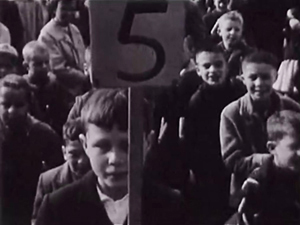
A living legend and an innovator in several different photography genres, including abstract, street, and fashion, William Klein also boasts a reputation as an innovative and prolific filmmaker. True to form, he tried his hand at a number of film genres, including experimental avant-garde works, documentaries, and features. Gare de Lyon, one of his earliest efforts, is much more modest in ambition and scale than his later films. It’s a quick sketch made by a brilliant autodidact who is just beginning to test the limits of the medium—and a relatively simple concept executed extremely well. Within a brief time frame (approximately 12 minutes), Klein captures a day in the life of the famous Paris train station from which the film takes its name.

Continue reading “Photographers as Filmmakers #3: Gare de Lyon (William Klein, 1963)”

In the Galleries: May 2021

Highlighting photography exhibits and photo-related happening in the Philadelphia area.

One tiny silver lining in the midst of the pandemic has been the proliferation of online exhibitions. Museums and galleries around the world are beginning to utilize virtual presentation platforms, and it seems likely this trend will continue. Granted, looking at images on a screen is no substitute for engaging with artwork in person. However, since some museums and galleries remain closed to the public, going online is currently the only way to access their special exhibits and collections.

Continue reading “In the Galleries: May 2021”

Book Review: Yamabito, the Mountain People by Osamu Sato

In the 1970s, an unassuming Tokyo salaryman used his one day off each week to journey into the mountains of Gunma Prefecture, an 8×10” view camera in tow. Leaving the city behind, he trekked—first by train, then by bus, and finally on foot—until he arrived at the remote villages there.

Continue reading “Book Review: Yamabito, the Mountain People by Osamu Sato”

Book Review: Grim Street by Mark Cohen

It’s rare to see street photography that captures life in a small American town. Without the crowded sidewalks and anonymity that one experiences in a big city, street photography doesn’t seem nearly as viable. Yet, photographer Mark Cohen stalked the same small radius of Wilkes-Barre, where he lived and worked, for decades, taking groundbreaking and revealing photos of small-town life that revel in the details. A well-edited selection of his black-and-white work comprises Grim Street.

Continue reading “Book Review: Grim Street by Mark Cohen”

Photographers as Filmmakers #2: Candy Mountain (Robert Frank, 1987)

Photographers as Filmmakers is a series that explores films made by iconic photographers.

In 1958, photographer Robert Frank published his groundbreaking and highly influential masterwork The Americans. A year later, he segued into filmmaking. He directed the surreal, semi-improvised Beat classic Pull My Daisy (1959), along with a brilliant and difficult-to-track-down documentary on the Rolling Stones, and a myriad of short, avant-garde films. He occasionally dabbled in other formats as well, even branching out into music videos.

Candy Mountain, a low-budget independent feature from the mid-1980s that Frank co-directed, easily ranks among his most significant filmmaking achievements. It’s a deeply personal work etched with social commentary that drives home just how much, in the wake of The Americans, Frank strove to distance himself from that career-defining body of work. It’s also his most mainstream project, and one that he ultimately deemed a failure.

Continue reading “Photographers as Filmmakers #2: Candy Mountain (Robert Frank, 1987)”

Book Review: Palante: Young Lords Party by Michael Abramson with the Young Lords Party

Initially published in 1971 and reprinted in 2011, Palante tells the story, in words and pictures, of the New York City chapter of the Young Lords Party.

Inspired by the Black Panthers, the Young Lords Party was an organization of Puerto Rican activists and community organizers, many of whom were first-generation college students at the time. The movement’s heyday lasted a little under two years, from 1969 to 1971. During that time, its members were on the frontlines of the struggle for social, racial, and economic justice. They were self-described socialist revolutionaries who took a strong stand against police violence, systemic racism, and colonialist policies. Not surprisingly, they constantly found themselves subjected to arrest, surveillance, and harassment by the powers-that-be.

Continue reading “Book Review: Palante: Young Lords Party by Michael Abramson with the Young Lords Party”

Photographers as Filmmakers #1: Manhatta (Paul Strand and Charles Sheeler, 1921)

Photographers as Filmmakers is a series that explores films made by iconic photographers.

Welcome to the inaugural entry in this series! What better to start with than a semi-forgotten gem that MoMA cites as the first American avant-garde film? Manhatta was co-directed by Paul Strand, one of the most influential photographers of the early 20th Century. His co-director was the highly accomplished Charles Sheeler, a classically trained painter and self-taught photographer who came up with the initial concept for the 9-minute-long film.

Continue reading “Photographers as Filmmakers #1: Manhatta (Paul Strand and Charles Sheeler, 1921)”

Book Review: Why People Photograph by Robert Adams

This collection of short essays and reviews by one of the pre-eminent American landscape photographers explores a wide variety of topics covering all genres of photography.

A landscape photographer known for his black-and-white pictures of the American West, Robert Adams is a strong writer with a philosophical mindset. That’s at least partly due to his academic background: he received a Ph.D. in English literature and taught at the university level before discovering photography. This book is a follow-up to his previous collection of photography criticism, Beauty in Photography.

Continue reading “Book Review: Why People Photograph by Robert Adams”

Book Review: Photography Until Now by John Szarkowski

Curator and critic John Szarkowski boasts a larger-than-life reputation in the photography world. The former Museum of Modern Art photography director and author of the classic text The Photographer’s Eye, Szarkowski helped shape the way that photography was both perceived and utilized via groundbreaking exhibitions such as New Documents in 1967 and, two decades later, at the tail end of the 80s, Photography Until Now.

Continue reading “Book Review: Photography Until Now by John Szarkowski”