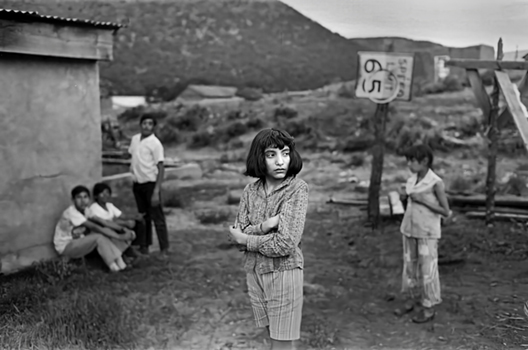
New Mexico’s mountains and pueblos have long exerted a magnetic pull on artists, idealists, and spiritual seekers. For a brief period in the 1960s and 70s, the region became one of the epicenters of the back-to-the-land movement.
During that time, there was an abundance of intentional communities based on shared values and rooted in social and environmental justice. Several of these communities have, against all odds, successfully stood the test of time, but the majority only lasted for a brief time—anywhere from just a few months to a few years at best. Lynn Adler’s book And So We Moved to Petaca rediscovers and helps preserve one of the ones that didn’t make it—a short-lived sustainable living experiment that, if not for her photos, might have been completely obscured by the sands of time.
Located several hours’ drive north of Santa Fe, Petaca in the 1970s was a small town of primarily Spanish-speaking subsistence farmers. It was there that a small group of friends, mostly recent college graduates who had been active in the Civil Rights movement, traveled from New York and the Bay Area. Their plan was to build a more sustainable way of life together. Five years later, they packed up and left.
Lynn Adler, a friend of the group and frequent visitor, took pictures of it all, using a 35mm Olympus camera that she had recently inherited from her mother and taught herself how to use. Afterwards, she filed the negatives away, and they went untouched for decades. Downtime during the 2020 pandemic inspired her to go back and revisit her early work, which she shared on Instagram. The black-and-white photos caught the eye of former Life photo editor Bill Shapiro, who helped bring the story to life. The result is one of the most interesting photobooks of the year. If not for these and other small miracles, Adler’s intimate, emotionally resonant work might never have come to light, might never have been made to begin with, and this brief chapter in American counterculture history would have remained relegated to obscurity.
Adler dedicates the book to both the counterculture activists who chose to live out their ideals together and to the traditional Hispano townspeople that initially welcomed them. Both communities are beautifully featured in the pages that follow. For a self-taught photographer just starting out, her instincts and sense of composition were remarkable, as was her ability to find deep meaning in ordinary moments.
The first section of the book focuses on the locals. The opening photo, titled “Entering Petaca,” establishes the setting. The town is pictured from a slight distance, cropped into a panoramic style format, as children race down an unpaved road towards a cluster of modest houses. From there, slice-of-life moments and tender portraits of residents of all ages evoke a largely unchanging way of life, with just a hint of contemporary influence: A few pages after an image of a traditional vaquero on horseback, two youthful lowriders in fashionable outfits strike a casual pose with their car.
The second section traces the arrival of the “Anglos.” The setting is re-established via a landscape photo that depicts a rugged expanse of land. On the following page, a young couple, Marty and Gloria, are pictured in their car, as if arriving for the first time, their faces alight with optimism.
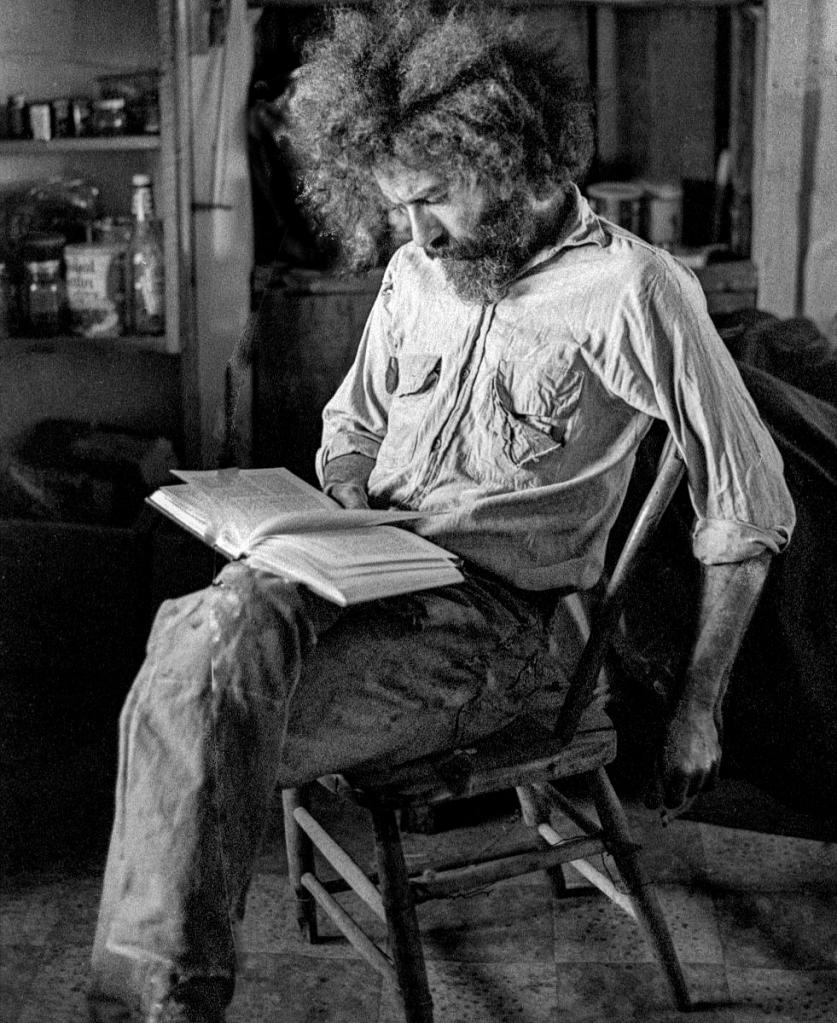
The images here showcase the group’s admirable commitment to the difficult manual labor required to live off the grid. They gather firewood, carry buckets of water, mend clothes, and clear the fields. In one image, a bearded activist named Marty sits quietly in a wooden chair engrossed in a book–specifically, The Horsedrawn Ploughing Handbook. The photo alludes to his devotion to traditional methods of farming while also giving insight into his upbringing and education. (After all, who else besides an intellectual would read a book on ploughing?) Adler also includes a nicely composed shot of herself making coffee on the stove in Marty and Gloria’s rustic kitchen. In doing so, the photographer situates herself in the story as a friend and participant-observer.
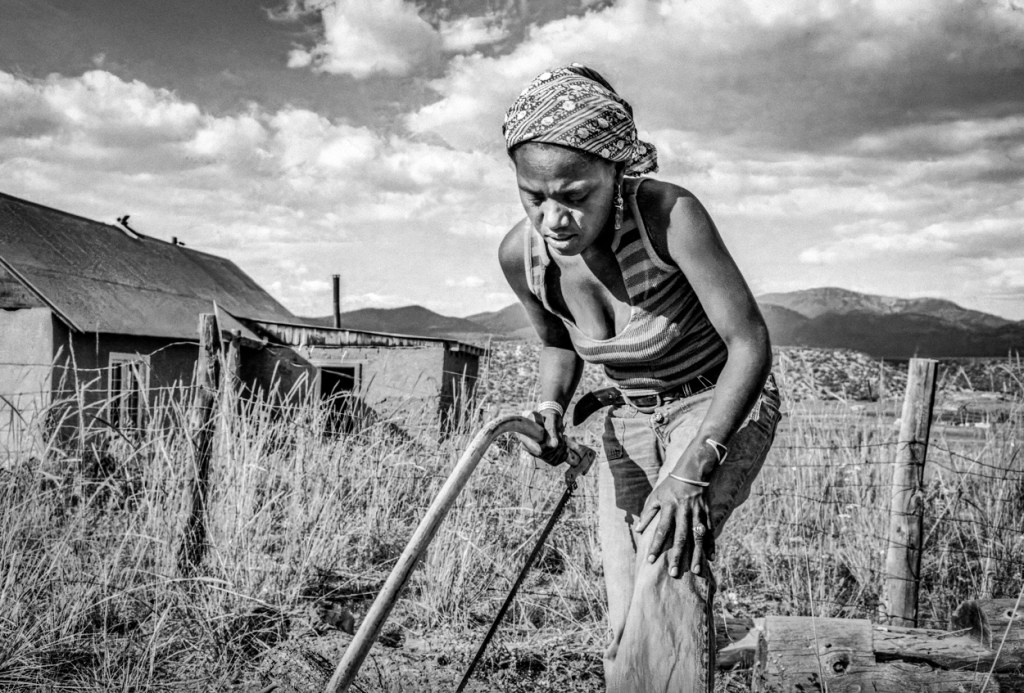
The third section focuses mainly on a Black single mother and community organizer named Claudia who also made the journey. It unfolds like a great magazine story. The photos are tender and personal, especially the ones of her playing outdoors with her young child. Given the times, they are undeniably political as well.
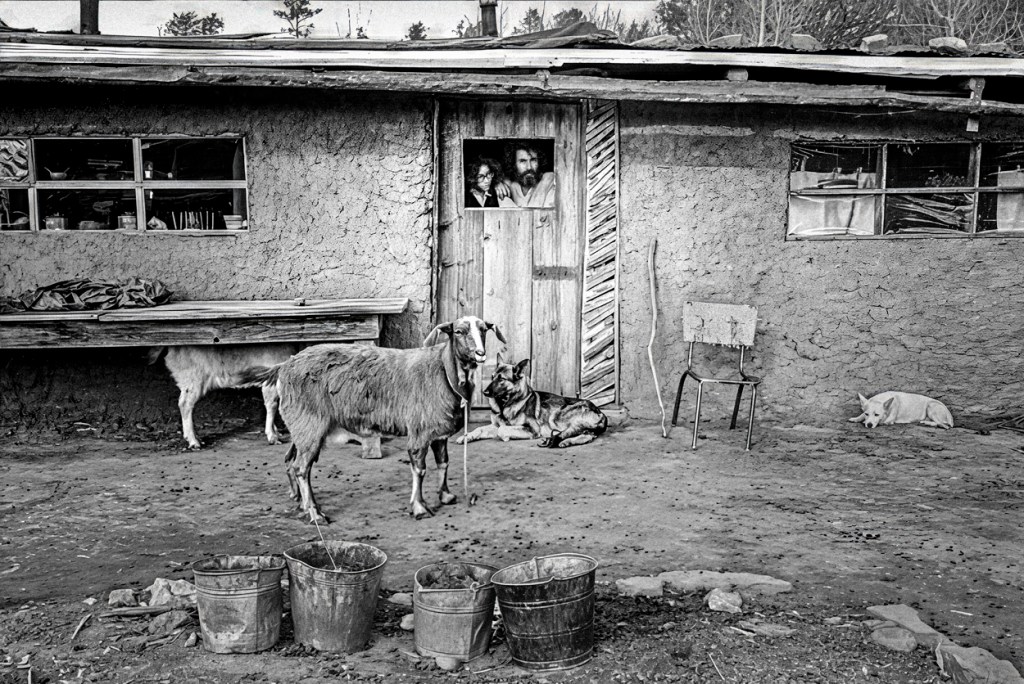
Over time, the new homesteaders gained trust and built friendships with the locals. According to Adler, the Hispanos spoke English, and the hippies were fairly fluent in Spanish, so there wasn’t really any language barrier. But the original residents were fearful of being overtaken and displaced. In their attempt to create a more just world and live by their values, the new pioneers had begun a process, however inadvertently, that had the potential to take things in the opposite direction. “In the end, Adler’s friends were forced to leave Petaca,” Bill Shapiro writes in his introduction. “There was no time for good-byes or final photos. A chapter closed as quickly and unexpectedly as it had begun.”
The culture clash happens out of sight, so the book ends on a more melancholy note: a landscape featuring junked cars, a small rundown shack, and several scattered one-story homes, taken during a downpour.
Actually, it doesn’t quite end there. Two key texts at the end augment the photos and help make the story more well-rounded. The first, entitled “Once Upon A Time in Petaca,” is an enlightening in-depth interview that Shapiro conducted with Adler. The second, “Petaca’s People,” is a beautiful tribute to both the townspeople and the outsiders who tried to make Petaca their home. Beneath cropped headshots, Adler writes a couple of paragraphs about each person who appears in the photos–not just how they were back then but also about their lives after that period in time.
“Once Upon A Time in Petaca,” incidentally, would also be a great title for the book. The actual title is, notably, the second half of an unwritten sentence. Perhaps it alludes to how the images create an impressionistic record of a place in time that, to borrow a phrase, has long faded from the world. But the work is more than that. Adler’s evocative photos add a great deal to our broader understanding of that era in American history on a human level. They comprise a heartfelt elegy to youthful idealism and a small, close-knit rural village alike.
And So We Moved to Petaca: Portrait of a New Mexico Community by Lynn Adler (University of New Mexico Press, 2026)

