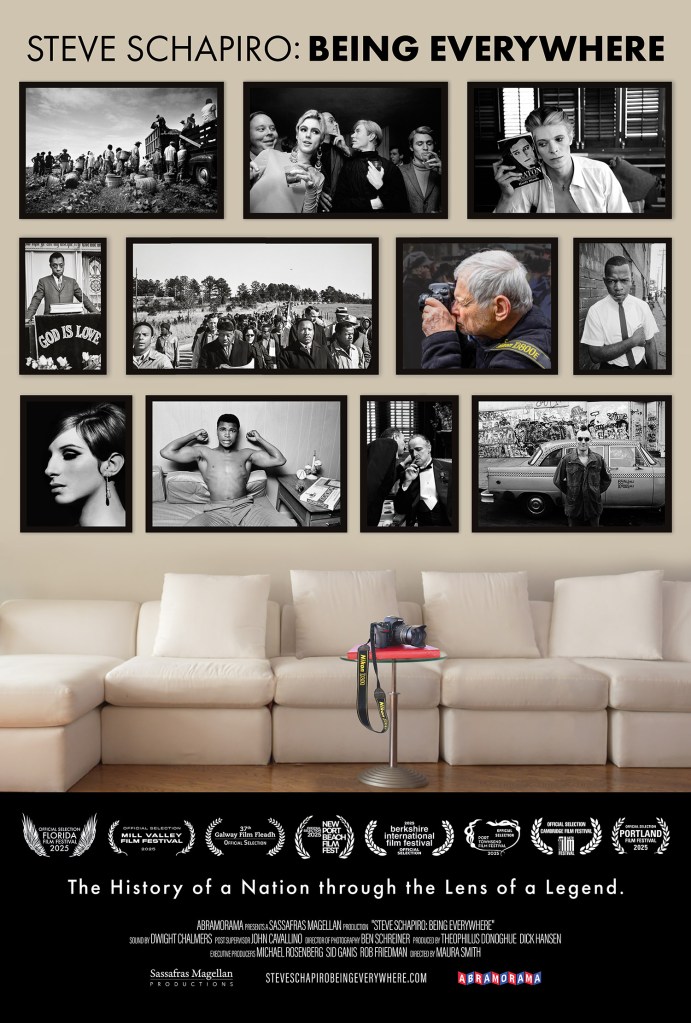
You know his photos even if you don’t know his name. There are the ones emblematic of the turbulent history of the 1960s and 70s. There are intimate portraits of presidents, authors, historical figures and celebrities of all stripes. And there are the iconic movie posters intimately connected to classic films such as Midnight Cowboy and Taxi Driver. During the golden age of photojournalism, Steve Schapiro’s photos appeared in every major publication; as an on-set photographer, he went on to leave an indelible mark on cinema.
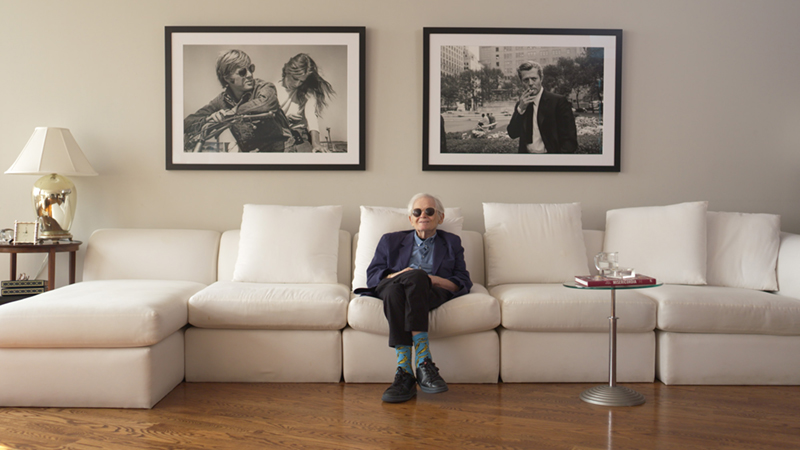
A new documentary, directed by Maura Smith, celebrates Schapiro’s legacy and sheds light on the question: How was one unassuming guy responsible for so much incredible and important work across genres? How was he, in fact, seemingly everywhere? Combining interviews with Schapiro and slideshow-style montages of archival photographs that range from the instantly recognizable to deep cuts, Steve Schapiro: Being Everywhere is a strong testament to a great, often overlooked photographer.
The documentary covers each stage of Schapiro’s career in roughly chronological order. Schapiro walks us through his archive, starting with his “decisive moment” street photography before progressing to his early concerned documentary work. Schapiro got close and personal to an incredible degree with historical figures such as Muhammad Ali, Andy Warhol, James Baldwin, and Bobby Kennedy, capturing intimate moments in their lives. It’s fascinating to hear the stories behind the photos.
Smith, a filmmaker who was married to Schapiro until his passing, lets Schapiro’s storytelling and charming personality drive the proceedings. And ever the documentarian, Schapiro is happy to let his subjects shine through, rather than shift the focus to himself. When talking about his photographic approach, the photographer emphasizes his connection to his subjects rather than, say, which camera gear he preferred or other such superficial concerns. The film ultimately builds to an emotional climax: Schapiro’s story of his friendship with Martin Luther King Jr. and his subsequent heartbreaking coverage of the assassination.
Schapiro’s photos are shown full-frame long enough for the viewer to take them in. They are generally paired with well-chosen music cues. (His civil rights work, for instance, is accompanied by Angel Bat Dawid’s “We Are Starzz”.) Thankfully absent are the pans, zooms, and quick edits that hamstring so many other documentaries on photographers. Smith trusts in the power of the images themselves to keep the audience engaged and gives those images room to breathe.
In the film’s final segment, a pastor oversees Schapiro’s late-in-life conversion to Christianity just before his passing in 2022. It’s nice to see candid footage of Schapiro, and he is clearly happy to have the moment documented. (Schapiro’s emotion is so genuine, he is moved to tears during the ceremony.) But it also happens to be the only time that Schapiro’s religious beliefs manifest themselves onscreen, so it comes a little out of the blue. Afterwards, there’s some footage of him documenting Trump-era protests as he continues his life’s work. As we watch him move through the crowd taking photos, his empathy, idealism, and absolute love of the craft shine through. It points to an even greater spiritual conviction–an absolute belief in the mission and the power of the photographic image. It’s a lovely note to end on.
Made at the end of Schapiro’s life, this documentary exists not just as a record of a great photographer but as a chronicle of the people and events that he bore witness to. It’s a loving tribute that preserves and promotes his indelible legacy.
Steve Schapiro: Being Everywhere (directed by Maura Smith). Color, 71 min., 2025.
As we head into the dog days of summer, here are three recently published books that we can’t stop looking at and thinking about:
Julie Bullard by Nadia Lee Cohen and Martin Parr (IDEA, 2025)
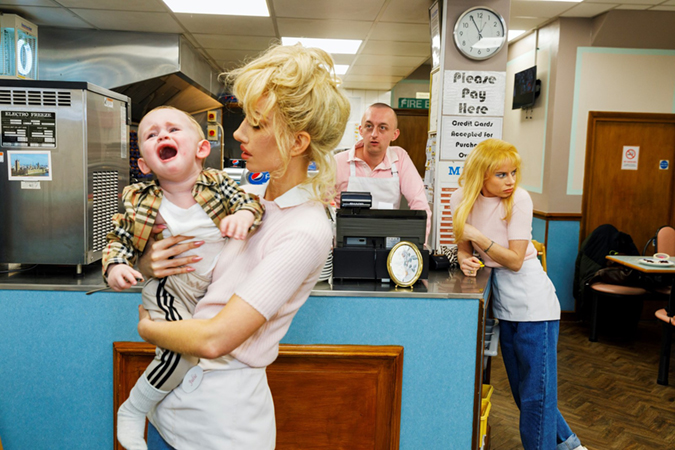
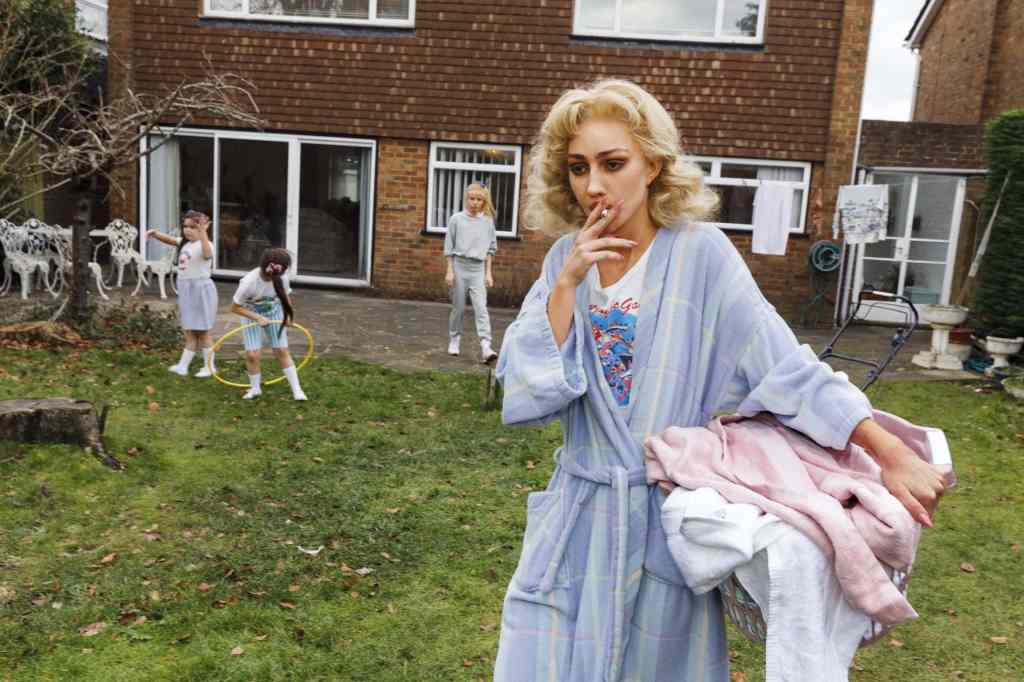
from Julie Bullard by Nadia Lee Cohen and Martin Parr
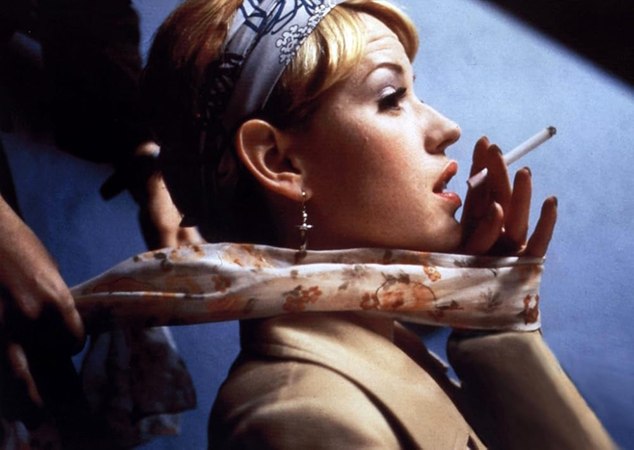
In Julie Bullard, shape-shifting artist Nadia Lee Cohen joins forces with iconic Magnum photographer Martin Parr to create a series of photos depicting a fictional character partly inspired by her childhood babysitter. As the title character, Cohen explores archetypes of feminine glamour while undercutting them simultaneously. It’s both a tribute and a satire. Although the images are all highly constructed and carefully staged, they feel wonderfully candid—despite the wigs, costumes, prosthetic noses, and make-up. Once a scene was set up, Parr photographed it candidly, as a street photographer might. Perhaps comparisons to Cindy Sherman’s untitled film stills are inevitable, but to my mind, the gently acerbic humor and loving ode to a certain stripe of middle class British life shares more DNA with Parr’s photos of beachgoing Brits—and his early work The Last Resort in particular.
Spiral-bound, with a faux-leather cover, the packaging itself is quite unique. It’s practically impossible to pull off a spiral-bound photobook (you have to admire the chutzpah behind that decision). But somehow it works, just as Parr’s understated, ironic, naturalist style perfectly grounds the heightened theatrical aesthetic of Cohen’s physical transformations. The result is a fantastic—albeit unexpected—combination of artistic sensibilities.
The Palace by Mårten Lange (KARL, 2024)
from The Palace by Mårten Lange
From the ruins of historic European castles, photographer Mårten Lange’s latest book The Palace conjures a mythical labyrinth in decline and decay. Lange’s work intentionally evokes the ancient Roman concept of a “memory palace.” But the memories conjured here seem distant, incomplete, erased—perhaps they never existed at all.
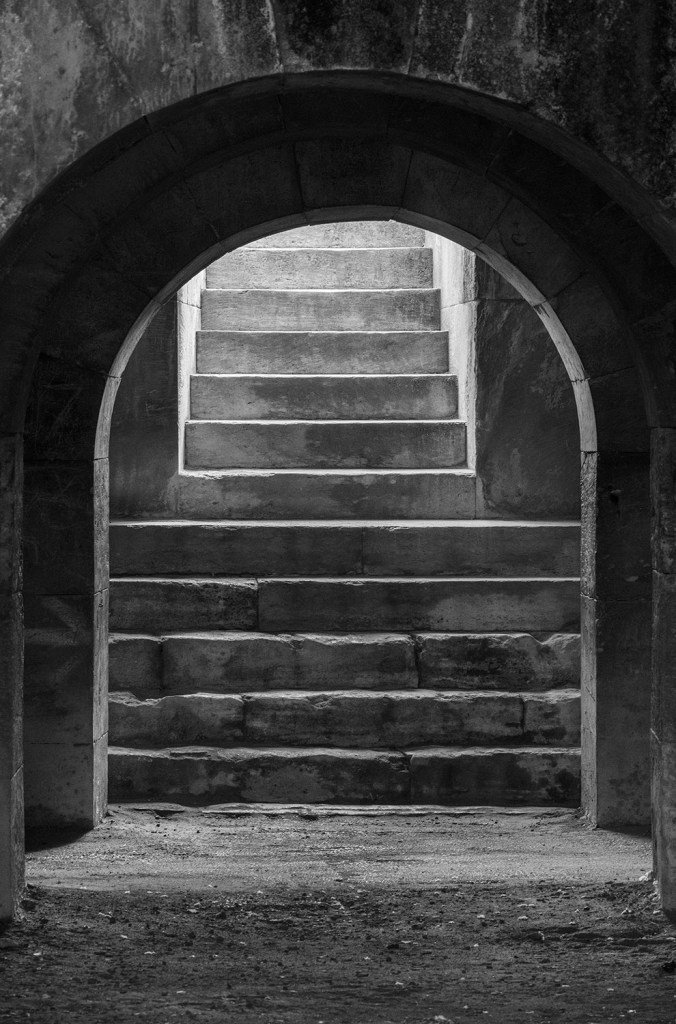
Lange’s evocative monochrome photographs (70 in total) reveal only architectural details—doorways, stairs, windows, bas-relief sculptures–“fragments of a stranger whole,” as he phrases it. The sequence creates a kind of maze, guiding the viewer into unknown territory. Secret doors lead to hidden passageways that, in turn, lead …where, exactly? Lange invites the reader to map the palace in relation to their own thoughts, moods, and memories.
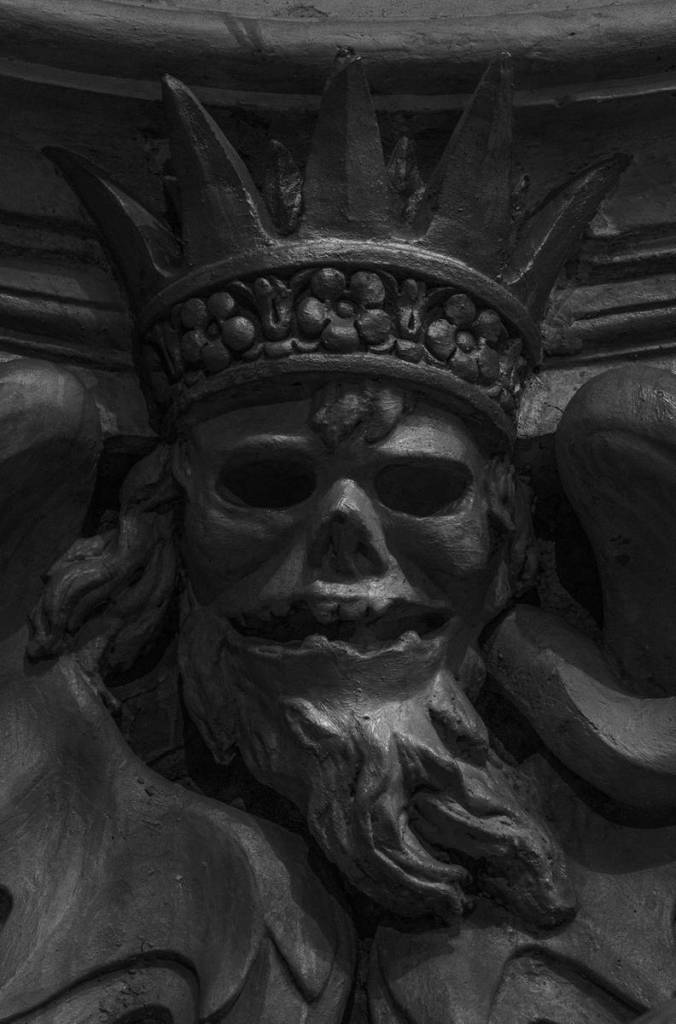
The work has a High Romantic sensibility, and there is a sense that one might encounter the Sublime lurking in the ruins. One standout image captures the hollow eyes and taunting expression of a wraith-like ancient king, his likeness carved into the very space that he once inhabited.
from The Palace by Mårten Lange
“Speaks in a dead language,” is the image description, which serves only to further obfuscate viewers. It’s found in the Notes section at the end, which intentionally reads more like lines excerpted from a poem. Lange writes, “In a memory palace, the practitioner imagines rooms, doors and corridors, each containing an image or a passage of text…The remembering process is then performed as an imagined journey through this space.” Our memories, therefore, must guide us as Theseus’s string did, as we navigate terrain at once familiar and strange, straightforward and bewildering.
Failing by Mike Brodie (Twin Palms, 2024)
from Failing by Mike Brodie
Mike Brodie’s first book, A Period of Juvenile Prosperity (2013), left an indelible impression on me. It celebrated the train-hopping “crusty punk” lifestyle and those who lived it from the intimate perspective of someone who was very much a part of that world. Critics viewed it as the contemporary equivalent of Kerouac’s On The Road – a resolutely personal and deeply American travelogue unfolding in something approximating stream-of-consciousness.
Failing, Brodie’s first new body of work in over a decade, picks up where Juvenile Prosperity left off. It’s a welcome return from a self-taught photographer with a unique, unvarnished voice who almost instinctually combines a documentarian’s sensibility with a vernacular aesthetic in a way that few if any can.
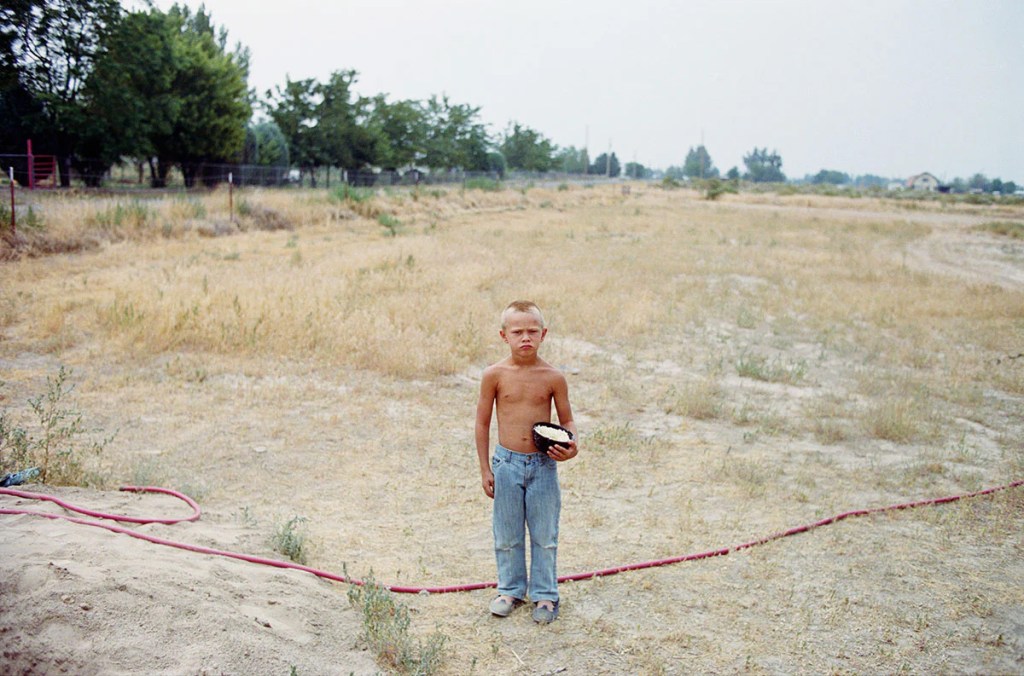
Failing is more autobiographical and more self-reflective than his previous work, unfolding almost like a photo-diary, and often incorporating pictures of friends and loved ones. It’s also a darker journey—the reckless spirit of youth has largely given way to weary, aging visages. (Even a young boy, shirtless in jeans, standing center frame in one photo, seems much older than his years.)
The path here is littered with difficult decisions, personal demons, and relationships that ended too soon. Death stalks these pages in both literal and metaphorical ways. The work can be raw and uncompromising. Yet there are also moments of pure joy, of connection, of serendipitous discovery, and a sense of hopefulness (if not the eternal optimism of youth).
from Failing by Mike Brodie
As was the case with Kerouac’s later works, Brodie explores and challenges the notion of “failure,” and in the process turns it on its head. In doing so, he creates meaningful art that challenges and, in its own way, reassures.
Photographers as Filmmakers is a series that explores films made by iconic photographers.
“All through the years, people have said, ‘you should make a film,’ or ‘aren’t you thinking about making a film, because it seems a natural next step?’ But I never wanted to work with a crew, since I don’t like to work with other people. I like having full control of what I’m doing. If you’re making a film, you give up control.” – Cindy Sherman
In 1997, Cindy Sherman released her first—and, to date, only—feature film. By that time, Sherman was already well-established as a master of the photographic self-portrait, revered in art schools, and internationally renowned to such an extent that she bordered on household-name status. That same year, MoMA mounted an exhibit of the complete Untitled Film Stills (sponsored by pop icon Madonna) and the Museum of Contemporary Art in Los Angeles debuted a mid-career retrospective of Sherman’s work. At the pinnacle of her fame, Office Killer, an underachieving arthouse horror-comedy, undercut her reputation like a letter-opener to the jugular. Rejected by both critics and audiences, the film has since been largely disowned by Sherman and relegated to the pop-culture scrap heap.
That’s too bad because the truth is, it’s not nearly as bad as its notoriety suggests. It may not be a great film, or even a particularly memorable one, but it’s entertaining. It stays true to the rules and conventions of the horror genre while finding interesting and inventive ways to color in-between the lines.
Screen legend (and national treasure) Carol Kane stars as Dorine, a high-strung oddball working as a copy editor for a Consumer Reports-style magazine called, in a tame attempt at satire, Constant Consumer Magazine. The magazine is in the process of downsizing, and as the movie begins, Dorine receives a memo informing her that she will soon be working remotely part-time.
This is a blow to Dorine, in more ways than one. When not at the office, she’s stuck taking care of her ailing, verbally abusive mother, and she doesn’t seem to relish the idea of spending more time at home.
For the time being, however, she’s finishing out her week in the office. One night, while working late, she accidentally electrocutes her sleazy boss. (The scene seems intended to be comedic, but it plays out in rather gruesome fashion.) She then decides to cover up his death, transporting his body to her house and stashing it in the basement rec room. When she literally gets away with murder, she begins targeting anyone in the office that she believes deserves to be punished. As more co-workers disappear, she gets rewarded with greater opportunities at the magazine, and the basement gets a little more crowded with new “friends.”
Meanwhile, several writers for the magazine, Norah and Kim, along with Norah’s boyfriend and office IT guy Daniel, are trying to figure out why their co-workers and supervisors are suddenly MIA. Slowly, they begin to suspect that Dorine might have something to do with it.
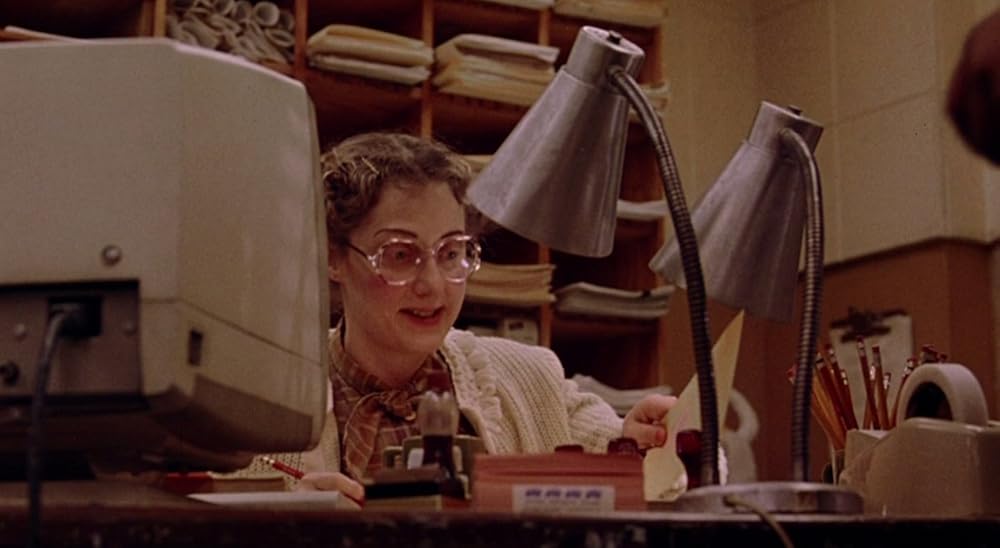
Carol Kane as Dorine in Office Killer
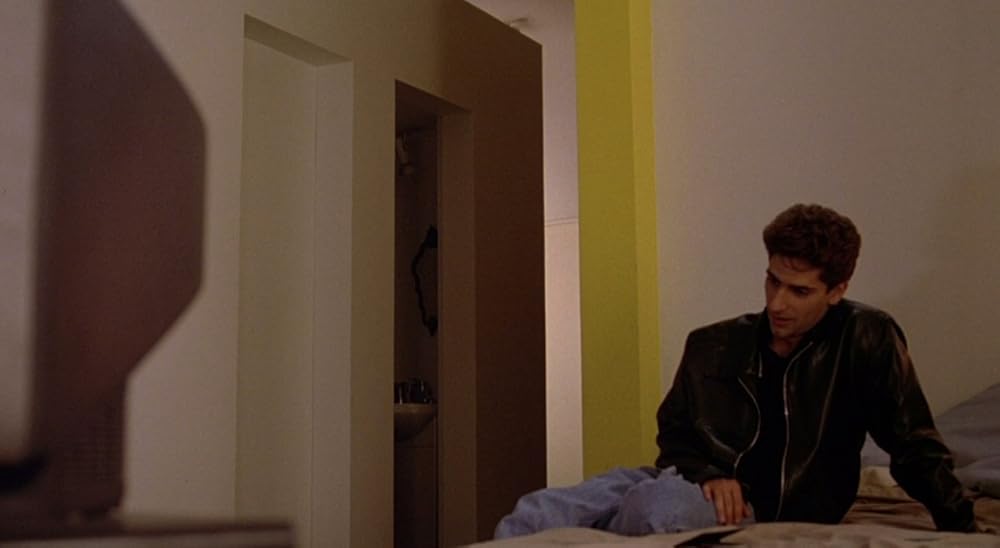
Sherman assembled an incredibly talented cast for her feature debut. It’s impossible to overstate how good Kane is in the role. There’s also Jeanne Tripplehorn as Norah, future Sopranos star Michael Imperioli as Daniel, Fassbinder favorite Barbara Sukowa as their overbearing, chain-smoking, “Devil Wears Prada”-type boss, and an uncredited Eric Bogosian as Dorine’s creepy stepfather. But the standout performance belongs to former 80s teen icon Molly Ringwald as Kim, Norah’s friend and co-worker. Ringwald takes an underwritten supporting role and transforms it into a memorable and relatable character, ultimately emerging as the de facto protagonist seemingly through sheer force of will.
The pedigrees on the other side of the camera are equally impressive. Todd Haynes helped with the screenplay just a few years before being nominated for a screenwriting Oscar for Far from Heaven. Evan Lurie (brother of John and former Lounge Lizard pianist) composed the offbeat, memorable score. Good Machine (the A24 of its era) was the production company, and Miramax handled distribution.
Still, despite all the talent, it falls short of the mark. Technically billed as horror-comedy, it’s more quirky than comedic, likely the result of blending two disparate visions. The principal screenwriters (Elise MacAdam and Tom Kalin) seem to be aiming for something tonally lighter and campier, while Sherman is more interested in surrealism and the grotesque. As a result, the film seems a little at odds with itself.
Similarly, despite the title, it’s not really a workplace satire. It’s a character study, a dissection of feminine archetypes, and an exploration of gender and power dynamics. In these ways, it’s totally of a piece with Sherman’s photographic oeuvre.
To that point, the film nicely subverts typical gender roles by transforming poor, helpless Dorine into an unstoppable superhuman killing machine. However, Sherman’s major miscalculation is making Dorine the main character. As in many of her self-portraits, Sherman places an eccentric caricature front and center. But ironically, what makes those images so compelling is ultimately what hamstrings the movie. Dorine, with her off-putting personality and mannerisms, works best in small doses. (The unnecessary reveal midway through that she was a nepo hire only further alienates her from the audience.) Making a more “normal” character like Tripplehorne’s Norah or Ringwald’s Kim the lead would have given the audience a character they could more easily root for and relate to. Then again, Sherman has never concerned herself much with relatability.
Dorine definitely belongs in the pantheon of Sherman’s creations. Like many of the director’s photographic personas, Dorine styles herself according to an outdated, overly-romanticized ideal of feminine glamour and makes herself look even more bizarre in the process. It’s hard not to focus on her unevenly drawn-on arched eyebrows that do little to hide her actual eyebrows. The same goes for her tightly parted half-bun hairstyle, her large octagonal glasses, and her frumpy office wear. The other characters’ fashion choices are culturally coded in retro-cool ways. Norah’s pink suit is reminiscent of Jackie-O’s iconic look, for instance, while Kim’s style is modeled on 60s Italian couture. (That office has quite a dress code.)
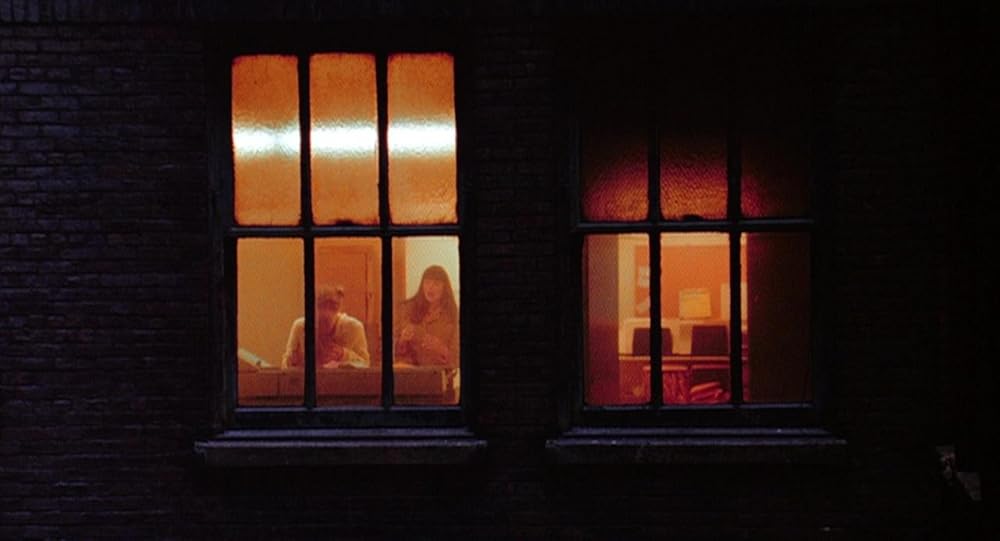
If turning screentime into Dorine Time is what threatens to drag the film down, the visual aspects of the film are what redeem it. Sherman, working closely with cinematographer Russell Lee Fine, proves herself an innovator in terms of composition, light, and color. The shots she designed draw more prominently from photography’s lexicon than cinematography’s.There is a great deal to study and admire in terms of the careful framing, the color palette, and the mise-en-scènes, all of which reveal an artist consciously avoiding cliches.The camerawork is often quite original—and at times inscrutable, in the best possible way. Who else but an art photographer would choose to shoot a dramatic scene from a distance, framed through a window and slightly obscured, for largely aesthetic reasons? But her left-field choices work, in part because they are both wonderfully innovative and aesthetically appealing.
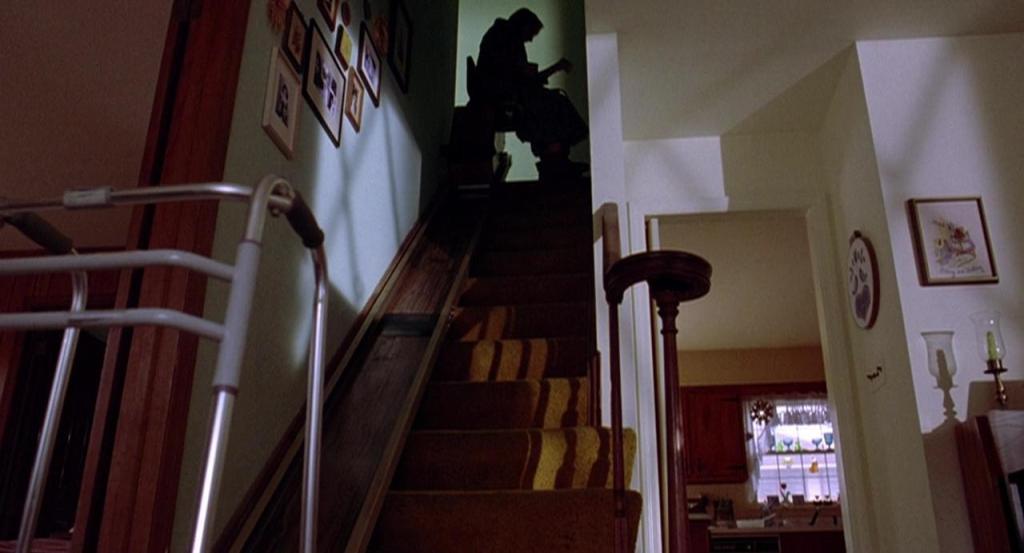
The cinematography elevates the material. Midway through the film, there’s an exceedingly slow take, as Dorine’s wheelchair-bound mother slowly ascends to the second floor on a stairlift while Dorine, in the background, busies herself in the kitchen. As the elderly woman rises, the light changes on her until she’s in full silhouette. The camera remains fixed on this moment even as the doorbell rings in the background. The frame is nicely bisected, and the decor gives the viewer a window into these characters’ lives. Everything is exactingly arranged, including the electric candlestick on the far right casting a macabre shadow. It’s mesmerizing.
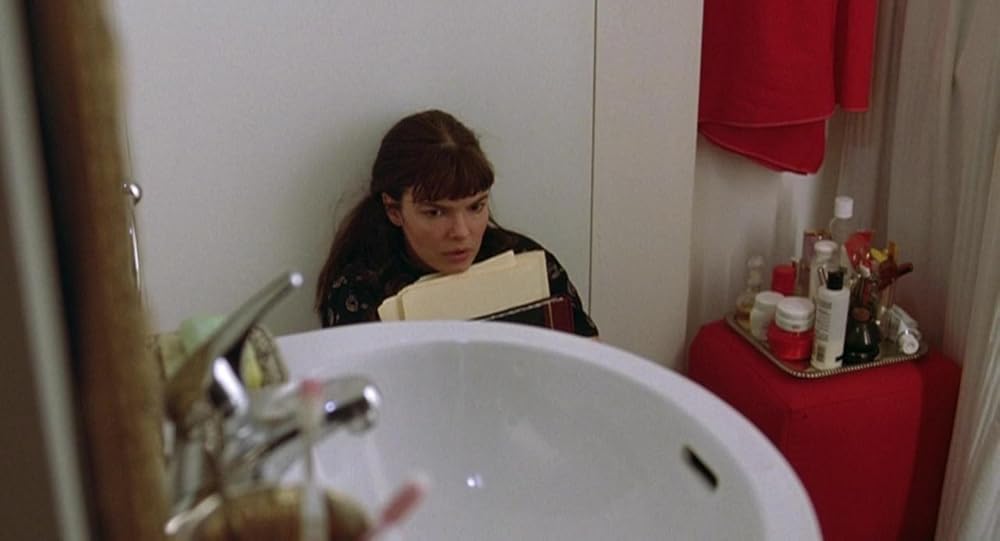
Likewise, the two (untitled) film stills below could be right at home on a gallery wall. Note the ways they both make use of primary colors such as red, white, and yellow. They are pop art in the best sense of the term. Each image is evocative, adding layers of depth and meaning to scenes that, on the page at least, don’t have all that much substance to them.
Jeanne Tripplehorne as Norah in Office Killer
Michael Imperioli as Daniel in Office Killer
For the visual aesthetic alone, Office Killer is worthwhile viewing for photographers. Had Sherman chosen to make an abstract experimental film—or had she chosen to create an installation of still images like the ones above and ditched the plot and dialogue—I could see this being one of her more celebrated works. Going against expectations, perhaps, she decided to do a more commercial project, and it ultimately got the better of her.
But for a first-time filmmaker in her 40s unaccustomed to collaborating with others and learning the ropes as she went along, she nevertheless acquitted herself nicely. In a way, this is her student film. I can’t help but wonder what her sophomore effort could have been, had she stuck with it, but movie-making ultimately proved antithetical to her creative process.
In the end, Office Killer is the kind of movie that’s more likely to have defenders rather than fans. It may not reach the high bar set by Sherman’s still photography, but it’s right in line with late-night basic-cable fare that you might pause on while channel surfing. It’s female-driven horror at a time when that was a rarity. And it’s at least as entertaining as a lot of the streaming content being churned out these days. Faint praise, perhaps, but sometimes that’s enough.
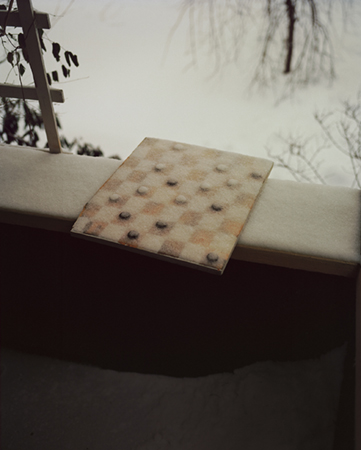
In Gregory Halpern’s latest book, King, Queen, Knave, the viewer’s initial perspective is that of an outsider who has found themself on the edge of an unknown town—a place pockmarked with the kind of snow that seems to have been there indefinitely and shows little sign of thawing anytime soon. Slowly, the sequence zooms in closer until the viewer is face to face with the people—and, occasionally, animals—who inhabit this enigmatic, contradictory landscape. Projecting both strength and vulnerability, they reveal the wounds they carry with them. The landscape bears its scars as well.
This body of work, comprised of 62 photos, was produced over two decades in the Magnum photographer’s home turf of upstate New York. While there is a subtle emphasis on social and economic issues, other elements figure more prominently. Rather than assemble a straightforward reportage, Halpern instead seeks out something not quite tangible. Ultimately, King, Queen, Knave is a highly poetic expression and a deeply personal experience of a place.
So many of Halpern’s pictures resist description that it is difficult to attempt to describe them. They seem to exist in a space beyond language. Perhaps Halpern’s greatest gift is his ability to focus on intangibles—to capture the gestalt of a place or a moment. Flip through the pages and you come across a broken gate, a house on a suburban street, a man walking through a snowy park bundled up from the cold. Easy enough to describe – yet all of these images are rendered in extraordinary ways. There is a haunting sense of dislocation embedded in their fibers. They are sublime, surreal, enigmatic, and profound in their execution.
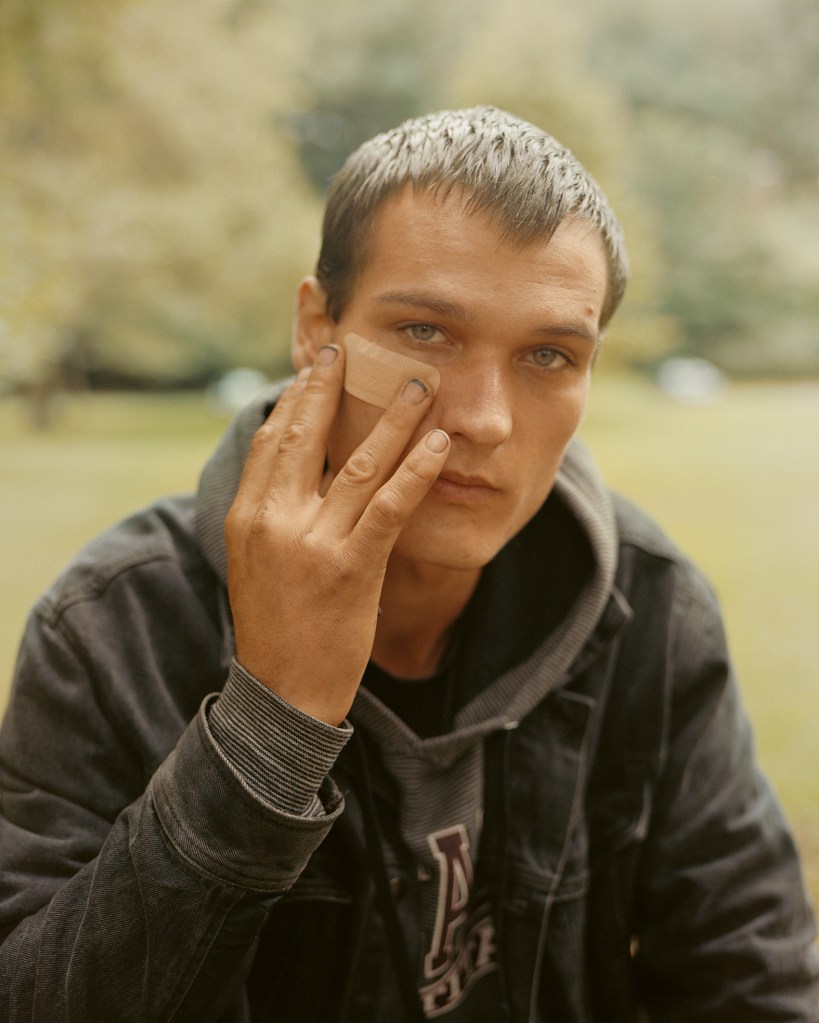
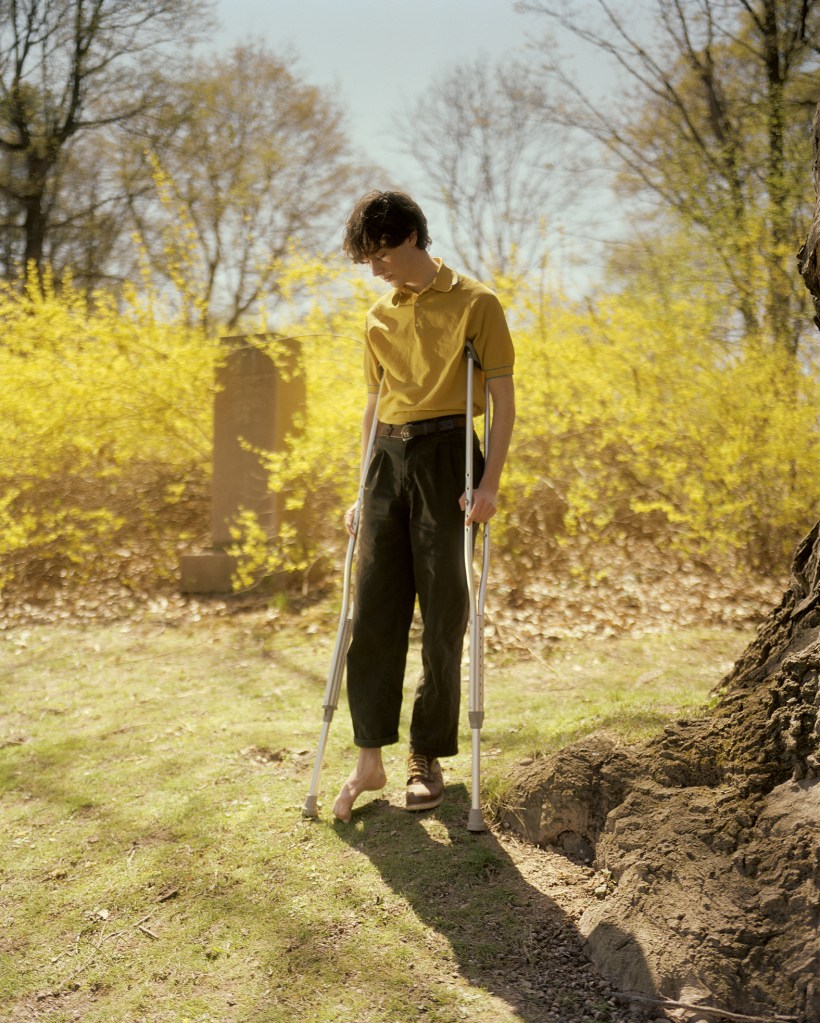
Halpern’s portraits, which are interspersed throughout, may be more “describable,” in a traditional sense (due to the fact that they are portraits), but they are rendered no less powerfully and mysteriously. Take, for instance, the image of a young man touching a large Band-Aid just below his right eye. That simple, quiet gesture reverberates emotionally without defining what that emotion is for the viewer. (Is he self-conscious about his injury or perhaps experiencing a phantom pain? There is any number of interpretations.) A carefully constructed photo of a boy on crutches, standing in a cemetery, one bare foot touching the ground in a way makes it appear deformed it as he gazes downwards contemplatively, carries similar emotional weight. There is a secondary visual impact as well—after a moment, one can’t help but marvel at how his bright yellow shirt matches the bright yellow of the foliage behind him.
Gregory Halpern, from King, Queen, Knave (MACK, 2024). Courtesy of MACK and the artist.
Gregory Halpern, from King, Queen, Knave (MACK, 2024). Courtesy of MACK and the artist.
Totem animals—both wild and domesticated—appear at intervals throughout the work. A white deer appears in the very first photo, ready to guide you into this world. The image of a white deer appears again, several more times, leading the viewer from inhabited and industrial spaces into a less-tamed natural space. (Whether the viewer is getting closer to a destination or further lost in a maze is difficult to say.) An owl perches on his handler’s glove, birds exist in and out of captivity, and large wolflike guard dogs skulk on the private-property side of a large metal gate. Humankind’s relationship to the natural world, a recurring theme in Halpern’s work, is prominent here.
True to Halpern’s style, every photo is a vertical. This effectively increases the sense of intimacy in his portraits. In his urban landscapes, the vertical alignment contains the environment in a limited scope, providing a counterpoint to the expansiveness of more traditional horizontal landscape photographs—both urban and natural. Verticals can also be a little disorienting, compared to “landscape mode”—a useful effect when constructing a labyrinth. Halpern’s preference for shallow depths of field adds to the dreamlike nature of the pictures.
Resolutely old-school, Halpern prefers color film to pixels, embracing the beauty and the idiosyncrasies of the analog process. As with his best-known work, ZZYZX, there is an otherworldliness to this collection of images. That transcendental quality is enhanced by the mechanical and chemical processes at work. In terms of straight photography, I generally believe that the choice of film or digital generally doesn’t really have much impact on the final image, beyond slowing down the process. Yet here, somehow, it seems as if the alchemy of the process has somehow seeped into the images themselves.
Gregory Halpern, from King, Queen, Knave (MACK, 2024). Courtesy of MACK and the artist.
Ultimately, the snow melts and the seasons change – but what does the arrival of Spring signify? As ever, meaning is elusive. Once you reach the end of the book, there is nothing to do except to turn back to the beginning, to start the journey anew, to delve back into the mysteries, and to explore the labyrinth once more.
The first image that appears in Alec Soth’s new photobook Advice for Young Artists is a green Post-It note with the words “WHO IS THIS BOOK FOR?” scrawled across it. That question, left unanswered, essentially serves as the artist’s preface. From the outset it’s clear that advice, at least in the traditional sense, will be elusive.
Anyone familiar with Soth’s wide-ranging, intellectually driven output, from his groundbreaking 2004 monograph Sleeping by the Mississippi through his most recent collection, A Pound of Pictures, should be well prepared to take this journey with him. In a sense, this book is a kind of spiritual sequel to Soth’s 2010 book Broken Manual, another “how-to” guide that avoids practical advice. Yet whereas the protagonists of Broken Manual were retreating from the world, the young artists in Advice are preparing to enter into it.
For this book, Soth spent time with students in various art programs across the United States. Yet, rather than simply document the current generation of art school kids, Soth used this as an opportunity to explore and to invigorate his own artistic process as well. It’s a great hook for a project, executed at a very high level.
Soth’s sensitive portraits of individual art students comprise slightly over a third of the book. These images have a wonderfully intimate, collaborative quality to them. Looking at them, August Sander’s work springs to mind. One clear parallel to Sander’s taxonomical approach is that none of these students are identified by name. Each photograph thereby becomes not just a portrait of a specific person but also a representation of a certain type of person—the art school student.
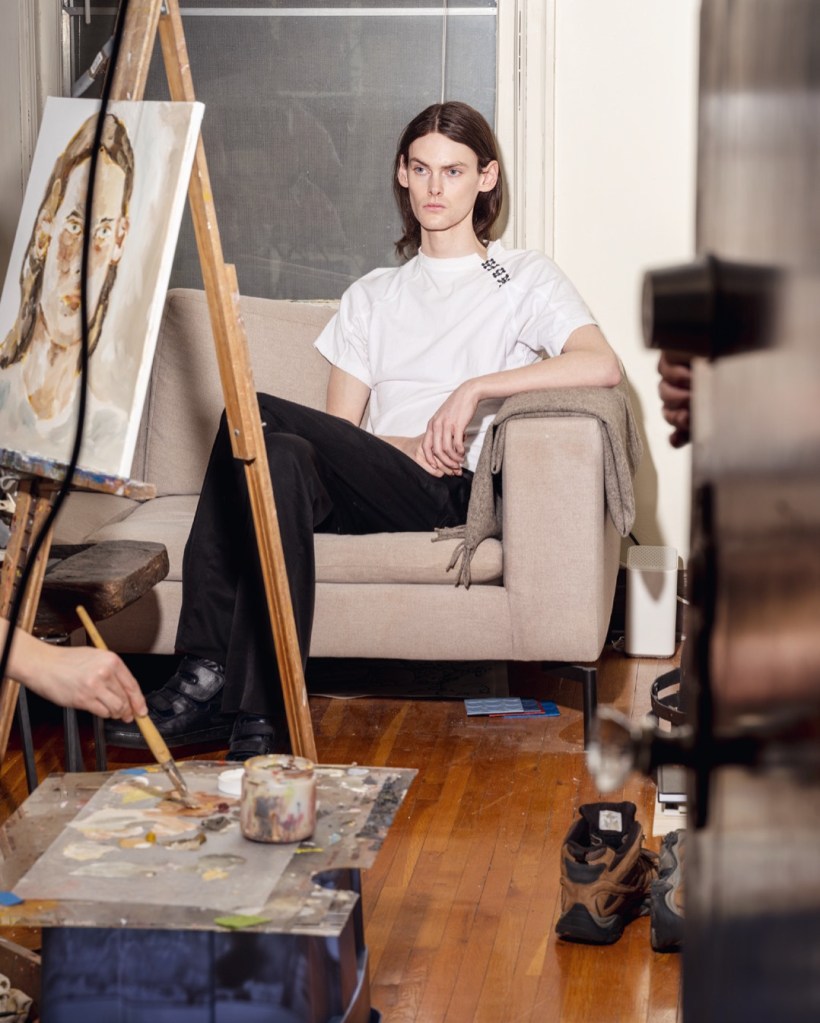
One standout portrait features a young man at an easel. Compositionally, the picture is rigorously balanced. The painter is bordered on both sides by paintings. On the left, a series of staples adhering the canvas to the frame move upward in a straight line like marching ants before taking a sharp right turn. Another easel on the right, angled at a slight diagonal, painting side towards the viewer, helps ensure the eye goes immediately to the artist’s expression. The viewer takes in his downcast eyes and contemplative countenance just before noticing the band-aid on his forehead. Then his dreadlocks, freckles and facial hair, the arc of a gold chain around his neck, and his bright yellow t-shirt. Taken together, these elements are riveting and a little mysterious—one can’t help but want to know more about him.
from AdviceforYoungArtists by Alec Soth (MACK, 2024)
Adding further dimension, a number of photos feature student works, both in progress and in situ. On display are cliches and experiments, the commonplace and the unusual, the various half-finished attempts of young students striving to find their voices. Taken cumulatively, they are emblematic of that formative time in an artist’s career when what one lacks in experience and mastery, one makes up for with passion and effort.
These still life pictures of students’ artwork are taken from the perspective of someone silently exploring this world yet disconnected from it. Significantly, there are no students present in those photos. On the other hand, Soth himself can be glimpsed lurking in the background of several–and in the foreground of one, which highlights a bust of what appears to be an elderly, emaciated man.
from AdviceforYoungArtists by Alec Soth (MACK, 2024)
Such photos are infused with a high degree of self-consciousness. Whether behind or in front of his medium format digital camera, Soth positions himself, very deliberately, as an outsider. He seems to perceive himself as trespassing through a space where he no longer quite belongs, perhaps at least partly due to age and experience. (Not merely performative, this comes across as a genuine sentiment.) There’s a wistfulness present in these pages: One gets the sense that, although he may not be able to go back to this stage in his life, he would very much like to.
Pictures of colored Post-It notes that Soth has written “advice” on appear interspersed throughout, breaking up the sections. Several are like Zen koans (“Patience etc.” reads one) and there’s a very deliberate cringe factor to this conceit that alludes to the type of fatuous work likely to pop up in a class critique. But it’s the note at the end—“Make me young, Make me young, Make me young!” (a quote from Kurt Vonnegut’s classic novel Breakfast of Champions) that makes the project’s thesis explicit. This is Soth’s reckoning as he comes to terms with his current stage in his career and life.
So, to go back and attempt to answer the question posed at the start, I believe this book is for anyone interested in the process of becoming an artist (however one defines that term). Anyone committed to the journey of self-discovery, anyone grappling with questions around age and experience. And, probably, anyone taking the time to read this review. It will have different resonances for older individuals than it will for younger ones, so it will be worth revisiting. It’s a fine addition to Soth’s overall body of work, boasting some of his strongest images to date (which is really saying something)—and one of the most fascinating and original photobooks of the year.
from AdviceforYoungArtists by Alec Soth (MACK, 2024)
Advice for Young Artists by Alec Soth. MACK, 2024. 72 pages. Hardcover.
About a month ago, I rewatched Scorsese’s 1985 dark comedy After Hours and it struck me that SoHo, depicted in the film as a bohemian wonderland / Dante’s inferno of artists, musicians, S&M devotees and Mister Softee truck drivers, currently boasts the most exorbitant real estate in New York, one of the most expensive cities in the world.
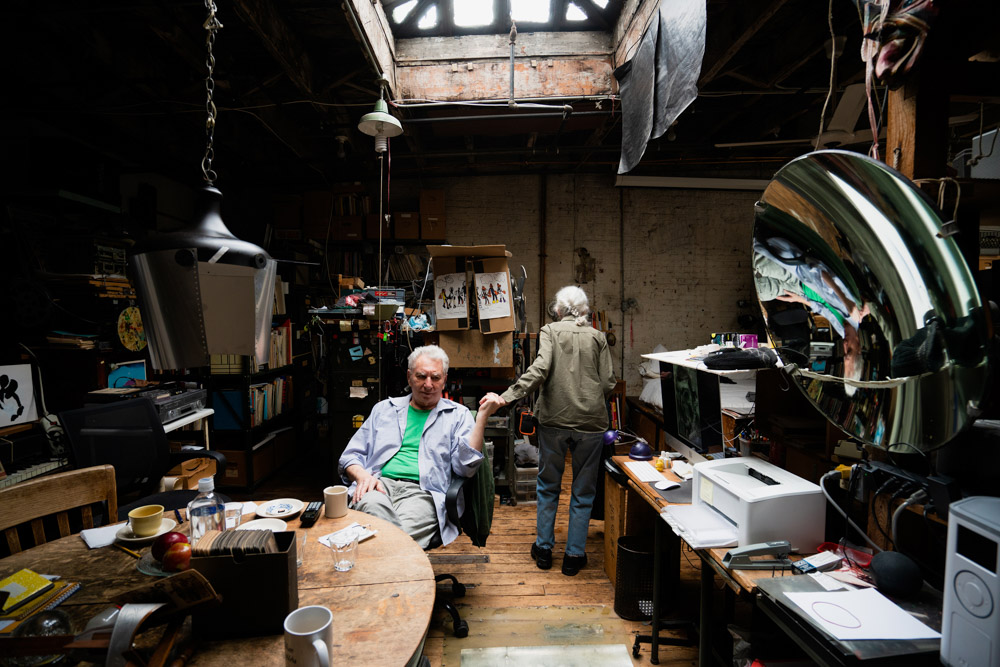
As unlikely as it seems, some of that rough-around-the-edges bygone boho sensibility has managed to survive the massive sea change of redevelopment. It is both surprising and comforting to learn that there are still artists and musicians living and working in SoHo, TriBeCa, midtown Manhattan and similar parts of the city. This is thanks to something colloquially known as Loft Law, from which photographer Joshua Charow’s debut monograph takes its title. Charow’s book profiles the last remaining holdouts benefiting from this early 1980s ordinance that paved the way for rent stabilization in a dynamically changing city. In words and pictures, he surveys dozens of artists who somehow managed to survive the commercialization and gentrification that completely transformed a number of neighborhoods throughout Manhattan and Brooklyn.
Charow’s preface explains the significance of Loft Law in greater detail. It also delves into his research process and tenacious doorbell-ringing approach that gave him the opportunity to visit these artists’ home studios. From there, the book is a whirlwind tour of everyone who let him in the door.
Ultimately, Loft Law is a story about artists and their relationships to the spaces where they live and work. It also serves as a kind of primer to some of the key figures in the city’s experimental art, film, and music scenes over the past several decades. Take just the first three featured in the book: pioneering avant-garde filmmaker Ken Jacobs, A.I.R. Gallery founder Loretta Dunkelman and influential composer, musician, and multimedia artist Phillip Niblock.
The book celebrates these artists’ life’s work and dedication to their calling—not just their shared commitment to affordable housing in formerly industrial buildings that once lacked plumbing and electricity. It’s an invigorating rediscovery of the city’s creative spirit that has been pre-emptively eulogized so often throughout the years. Here is proof that it hasn’t been completely displaced yet.
Ken & Flo Jacobs. Occupancy: Tribeca, 1965.
Individuals and couples are introduced by name and occupancy (the neighborhood and the year they moved in) – for instance, “Loretta Dunkelman, Occupancy: The Bowery, 1966.” In short text passages, the tenants reflect on their years in their lofts. Around five or six photos accompany each entry. These tend to be a combination of portraits, interiors, detail shots that often showcase artwork in situ, and what might be termed “hero shots” – main overviews of the space, usually with the artists themselves posing in the middle, at a distance from the camera. (A documentary filmmaker as well, Charow also made short films profiling the artists in tandem.)
Overall, the images can come across as a bit pedestrian, both as portraits and as architectural photos. However, this is a case where the subject matter and the storytelling take precedent over the aesthetics. It’s a great story well-told and it enshrines a part of NYC history that might otherwise go undocumented—or at the very least, underdocumented.
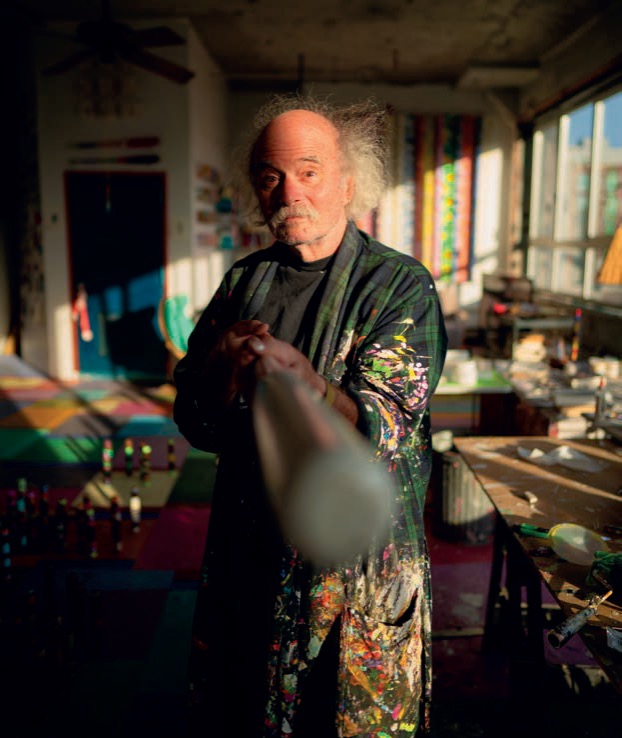
One of the more playful and dynamic images, framed as a vertical medium-length portrait, finds the photographer on the wrong end of a baseball bat wielded by wild-haired, mustachioed painter Steve Silver, standing in the center of his studio—no caption necessary. I would have loved to see more of these types of photos that deviate from the formula. (Incidentally, a different picture of Silver appears on the book cover—he’s just that photogenic.)
Steve Silver. Occupancy: Williamsburg, 1979
The book’s design is highly effective, both visually and conceptually. Charow’s research led him to the New York City Municipal Archive where he was able to track down blueprints of each building. Facsimiles of the layouts for each loft are incorporated into the white space framing the photos and text. It’s a fantastic touch that elevates the work tremendously.
Given the overwhelming emphasis on youth subcultures in contemporary photography, it’s refreshing to hang out with some old souls for a change. And make no mistake, there are no uninteresting stories here. All of these artists are worth spending time with and learning about—one loft at a time.
Loft Law: The Last of New York City’s Original Artist Lofts by Joshua Charow. Damiani Books, 2024. 192 Pages, 108 Photographs. Hardcover.
Between 1982 and 1984, celebrated British photographer Chris Killip chronicled life in the small fishing village of Skinningrove. 40 years later, this powerful, humanist body of work is finally seeing the light of day.
Admittedly, several photographs from Skinningrove previously appeared in In Flagrante and Killip had also presented the work in slideshow format, as seen in a moving and insightful lecture filmed by Michael Almereyda. But he kept a tight lid on the entire series for decades, which adds an aura of mystery to it.
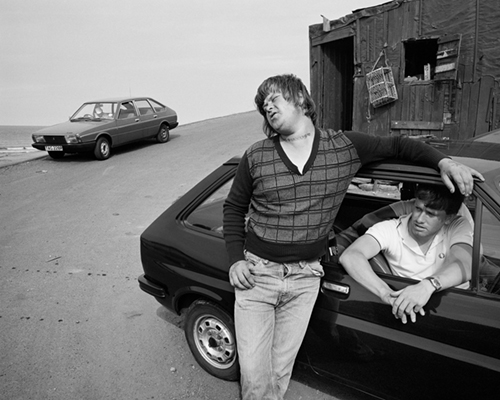
Working with a black and white palette, Killip documented English working class life throughout his career in ways that managed to be both painterly and realistic at the same time. The photos in this book are no exception. In one image, two ruggedly handsome young men on a small boat, one in overalls, the other’s trousers tucked into his fishing boots, look attentively at something off in the distance. Behind them, the sea merges with the horizon line to the point where it’s difficult to tell where the one ends and the other begins – the space behind them feels vast and infinite. While it’s the strength of their expressions and the intimacy of the moment that command your attention, what makes the picture even more extraordinary are the compositional details. Specifically, two small stick figures moving towards the edge of a large seawall in the distance. It’s a world that seems timeless and mystical.
The book opens with a few brief paragraphs, written by Killip in 2020, about the village and the project. He chronicles his experience gaining access to this insular world in broad strokes. It’s the kind of place where everybody knows everybody else, and where people tend to be, as Killip phrases it in his preface, “hostile to strangers, especially one with a camera.” Over time, with effort, he managed to earn their trust and gain entrance into the community.
The resulting medium-format photos are not overly idyllic (as Killip is quick to points out). Skinningrove is a place that embodies a certain type of toughness—the work, the weather, the mentality, and the grittiness and resilience of working-class men. The subjects of Killip’s photos are predominately male—and probably for good reason. In this type of community, it’s difficult to photograph married women without inviting unwanted gossip. The perpetually overcast weather becomes a character as well, the flat grey light a consistent presence. The influence of Paul Strand and Walker Evans can be sensed in these works, as well as Cartier-Bresson—always Cartier-Bresson. Perhaps, too, August Sander can be found in the sensitive social anthropology of Killip’s portraits of villagers, which appear throughout.
The sequencing, overseen by Killip before his passing, is extremely well done. The first few images set the stage perfectly: A picture postcard overview of the town from a bluff introduces the town. The next image introduces people into the landscape. In the subsequent photo, the landscape is now populated with small fishing boats. Those small fishing boats are more than just recurring motifs – they are essential to Skinningrove and the collective identity of the people who dwell there. This is a portrait of a community connected to the sea. The first few images strongly evoke the pastoral tradition, then the curtain is pulled back a little and you begin to see a very lived-in world. Killip’s formal compositions provide a sense of order to these spaces.
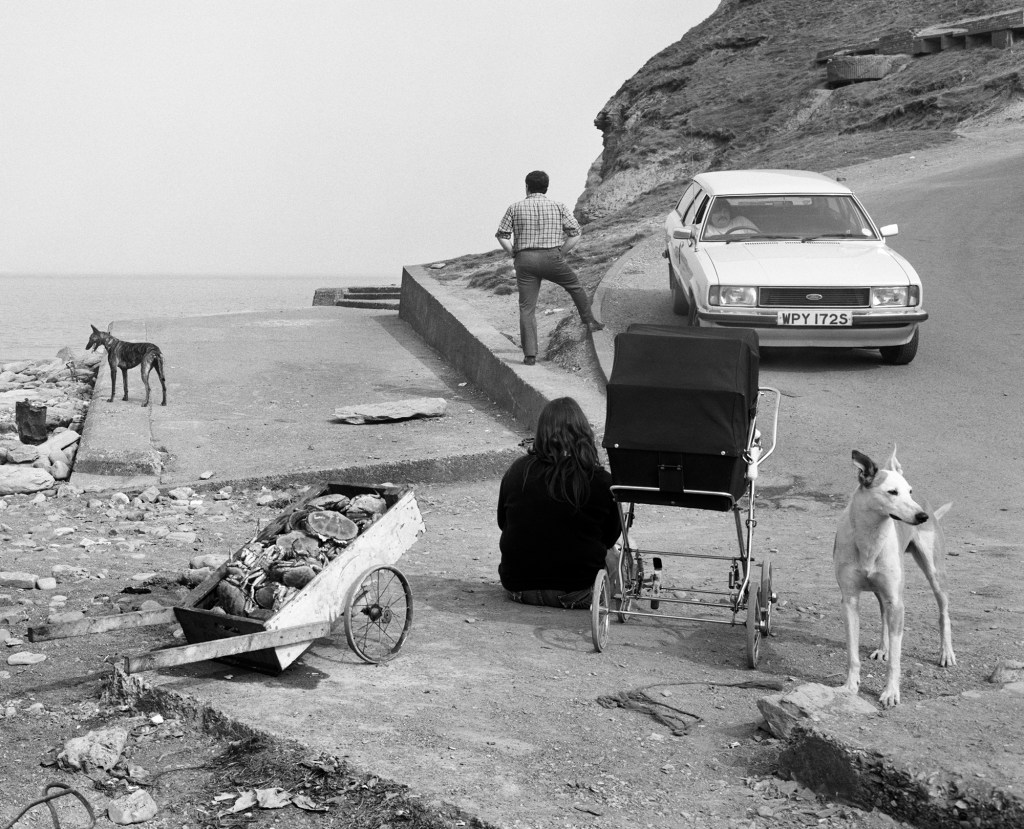
Crabs, people, dogs. From Skinningrove by Chris_Killip
Killip approaches every situation with tenderness and sensitivity. Here are children’s games, casual conversations, the intense concentration of people hard at work. Here too are the lingering scars of barroom brawls and expressions that convey personal struggles, along with a kind of restlessness of spirit.
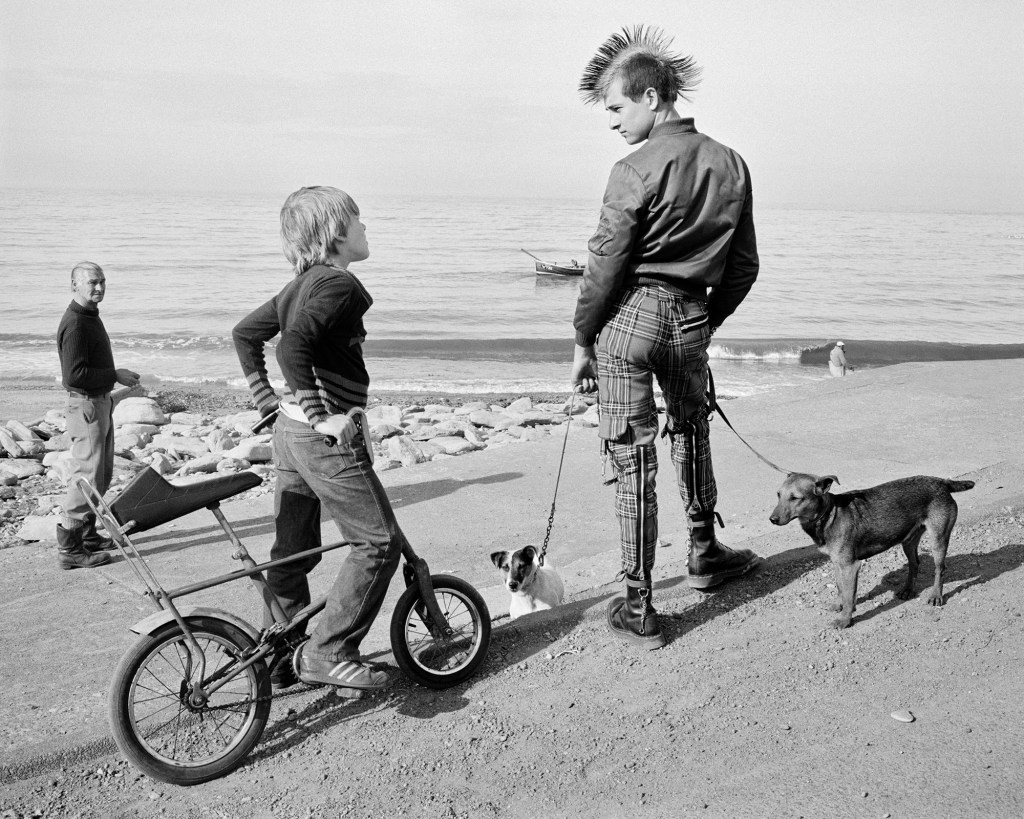
So much of Skinningrove feels timeless. Yet Killip also makes a point to show the influence of pop culture, in the form of punk music and fashion, on the young men of the town. In one photo, a young man nicknamed Whippet, sporting a carefully styled mohawk and tartan trousers, takes a break from walking his dogs to talk with a friend on a bicycle. His father looks on from the far left and farther away, a small fishing boat makes its way out to sea. All the essential components for a compelling short story present themselves in a perfectly captured moment.
Whippet and his two dogs. From Skinningrove by Chris_Killip
Set aside for several decades, the book originated as a self-published zine that Killip distributed anonymously to the people of Skinningrove. It has now found a permanent home at UK publishing house Stanley/Barker.
Celebrating and preserving a way of life in England that has all but disappeared, Skinningrove functions as both a tribute to the people of the village and a kind of elegy as well. It is a remembrance of a disappearing way of life—and also, more literally, four young men in the photos who drowned at sea. Killip’s short dedication to their memory appears at the end of the book and further elucidates his respect and admiration for the people dedicated to this way of life. This is an essential work for those interested in the art of documenting subcultures and communities.
Skinningrove by Chris Killip. Stanley/Barker, 2024. 104 pages. Hardcover.
Critics have long remarked on the difficulty of reviewing a book immediately after its publication. Ciro Battiloro’s stunning debut, Silence Is A Gift, is exactly the kind of book that demands time to absorb its contents, to let the images settle in the mind. More than just a promising debut by an emerging photographer, it’s a fully formed body of work by an artist well-versed in seeking out the sublime in everyday moments.
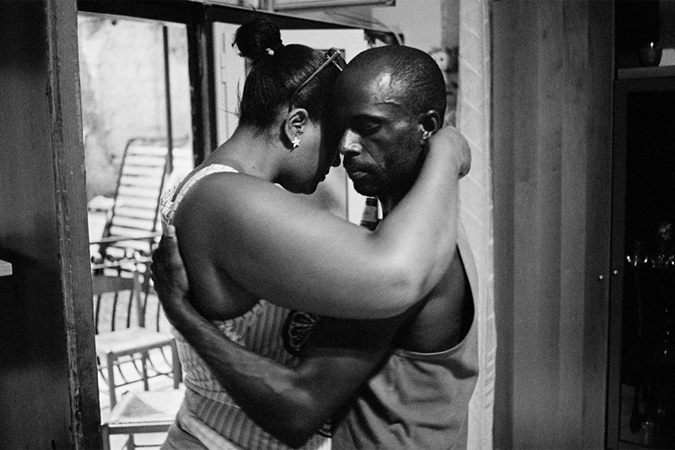
Photographing in his native Italy (mainly in Napoli and Cosenza), Battiloro documents intimate domestic moments. The people in these photos make their homes in disadvantaged, overcrowded urban neighborhoods, yet this is not intended as a socially concerned documentary work in the traditional sense. Battiloro has assembled a set of photographs that illustrate more abstract concepts – foremost among them, the need for human connection. One might think of this as a collection of short poems that complement, reflect, and build on each other – variations on a theme, on what it means to “only connect,” as E.M. Forster phrased it.
The book opens with the four words that form the title (silence is a gift) centered like a mantra on a gallery-white page. The phrase resonates on a number of levels. The people in the images seem quiet and contemplative, sheltered from the bustle of the outside world. The photographer himself is a discreet presence in these scenes. (“In these photographs, I see the will to go unnoticed, like a gust of air,” Italian author Erri De Luca writes in his afterward.) One more resonance – the viewer looking at the book is most likely regarding the images in silence.
For a photographer, the gift of silence can connote a deeper, more intimate level of access. I have sometimes felt that, generally speaking, the value of a documentary photograph increases in direct proportion to the photographer’s level of access. Yet, the value of a photograph cannot simply be judged in terms of access. (Aside from the photographer, nobody ultimately cares about how difficult it was to get the shot). It’s what the photographer does with that access and whether they succeed in capturing something – perhaps a moment or an expression – that conveys something vital and ineffable.
I am happy to report that Battiloro’s evocative 35mm black-and-white photographs accomplish this. The photos feature parents and children, couples, families, and individuals, usually together, sometimes alone. Battiloro pays close attention to expressions, gestures, and postures that communicate much while retaining a sense of ambiguity.
The sequencing enhances the work as the images echo and build on each other. Early on, the left side of one spread shows a solitary individual seated at a table, seemingly lost in thought. His prayer-posture hands endow his contemplative act with a spiritual component. They also obscure his face, save for one downcast eye. The way the light falls on the scene ensures his gesture is emphasized at least as much as his expression. Meanwhile, on the opposite page, a young woman with a similarly downturned gaze wearing a t- shirt that says “Perfect Love” appears lost in thought as well. An errant arm motion adds dynamism to an otherwise static portrait and helps forge a connection between these two individuals, both isolated in separate moments.
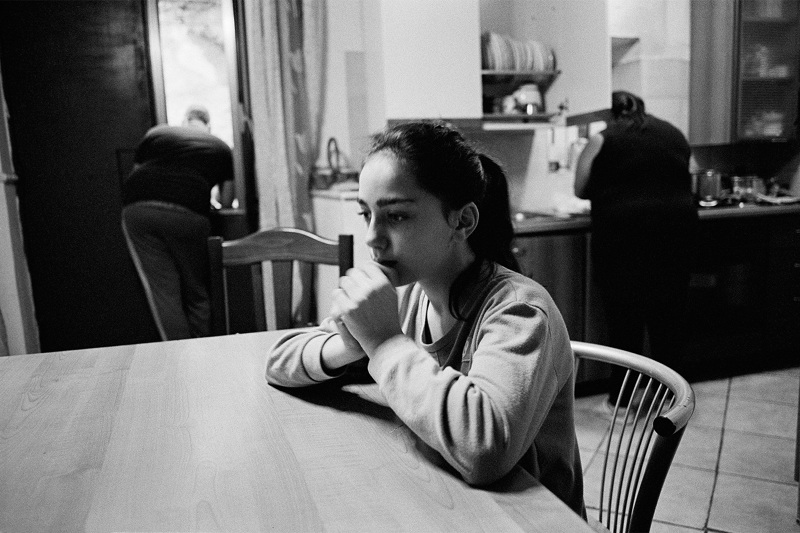
Those prayer hands reappear later in the book. This time, they belong to a young girl seated at a kitchen table. In the background, two older people (her parents or grandparents perhaps), their backs to the scene, busy themselves with separate chores. Compositionally, the three figures form a triangle, made visually complete via the young girl’s shoulder and elbow. This geometric form demarcates the space between the solitary moment and interconnectedness.
The absence of captions—or much at all in terms of explanatory text—leaves interpretation up to the viewer and helps convey the timelessness and universality of such instances. I keep coming back to an image of a young boy curled up with his puppy in bed, his head resting on a pillow, gazing at the camera, aware of the photographer’s presence but unself-conscious about it. The photo manages to evoke nostalgia without romanticizing childhood. And, like the best environmental portraits, it enables the subject to communicate something about himself.
Battiloro’s choice of black-and-white film, with its emphasis on form, composition, and light, prevents the book from becoming overly sentimental in places, since monochrome and grain tend to give a certain edge to pictures. (Most of the photos were taken in low-light situations and the photographer in me can’t help but speculate about possible film/developer combinations.)
Likewise, the traditional layout complements Battiloro’s traditional aesthetic. The images are printed one to a page, framed by the gallery-white tone of the paper. Sometimes there are two photos per spread, sometimes just one. The images, lushly reproduced, dance around a little, floating to the top, middle and bottom of pages, in a playful choreography.
The images transport the viewer inside people’s homes, arguably the most intimate space there is, and there’s a vibrancy and a kinetic energy to the work that is contagious. Looking at this book can light a fire in thephotographer’s belly to go out and create new work. By unveiling life behind closed doors, the photographer manifests the true power of the medium. Moving beyond the literal, he reveals what it means not simply to exist but to endure.
Silence is a Gift by Ciro Battiloro. Chose Commune, 2024. 92 pages. Hardcover.
I first came across Roman Vishniac’s book A Vanished World as a child, seeing it prominently displayed on a family friend’s bookshelf. The striking and sensitive black-and-white documentary photographs of people who seemed somehow both foreign and familiar commanded my attention. Even at that age, I understood their significance.
Vishniac’s photographs comprise an intimate record of the final moments of Eastern European Jewish communities before the Holocaust. His images record life in the villages and ghettos from which so many fled persecution—and from which so many did not escape. Being Jewish himself and living in Berlin at the time, he imbued his photos with a great deal of sensitivity and understanding.
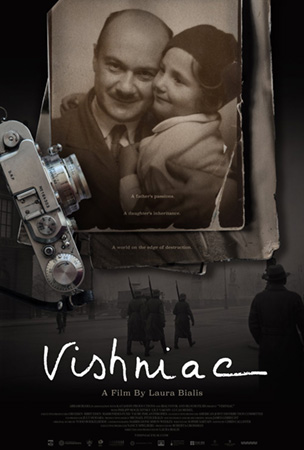
An excellent new documentary about Vishniac’s life and career, directed by Laura Bialis and simply titled Vishniac, tells the story of the man behind the photographs from the perspective of his daughter, Mara Vishniac Kohn. She took up the task of managing Vishniac’s photographic archive after his passing in 1990. (Initially slated to be acquired by the International Center of Photography, it is now housed as part of The Magnes Collection at Berkeley.)
Bialis moves quickly through Vishniac’s turn-of-the-century Russian childhood to his early adult life. As a young boy with a keen interest in science and biology, Vishniac became enamored with taking photographs through his microscope – his earliest attempts to document worlds largely hidden from view. In the 1920s, forced to flee Russia, Vishniac moved his wife and two children to Berlin, where he discovered Modernist photography and began capturing life on the street in stark, dramatic tones.
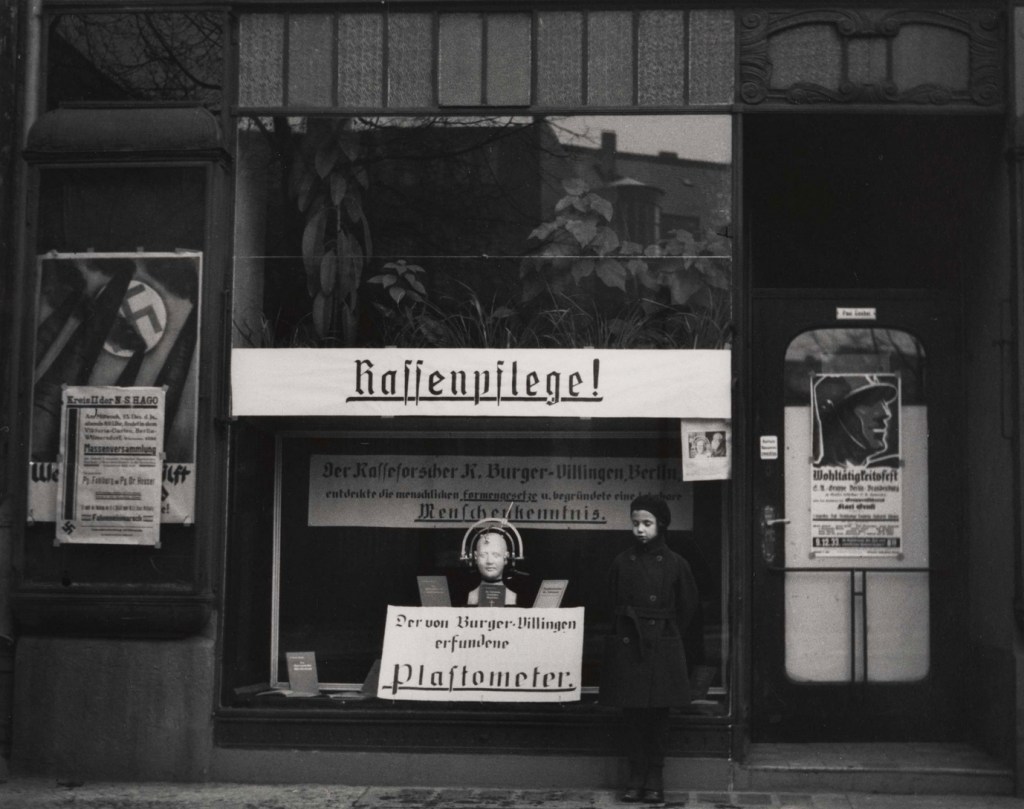
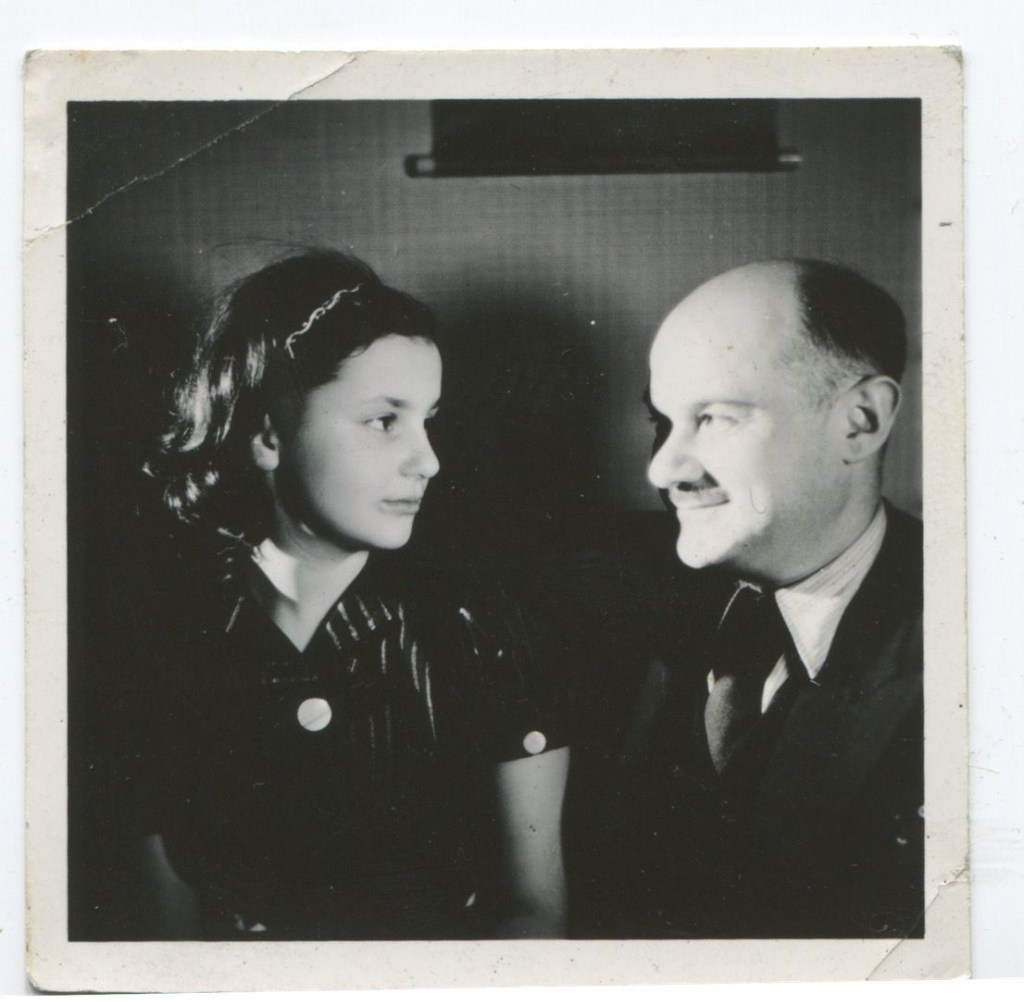
In the early 1930s, with Nazism fast on the rise, he started surreptitiously documenting the anti-Semitic propaganda spreading throughout Berlin. Mara relates that in order to avoid attracting suspicion, he would bring her along and have her pose for the camera, so that it would seem like he was simply taking a snapshot of his young daughter. In a journal entry, conveyed effectively via voice-over, Vishniac refers to a shop selling bogus craniometric instruments to supposedly prove one’s Aryanism as “the height of lunacy.” Vishniac’s shift towards a more socially conscious perspective leads up to the landmark body of work that ultimately became A Vanished World.
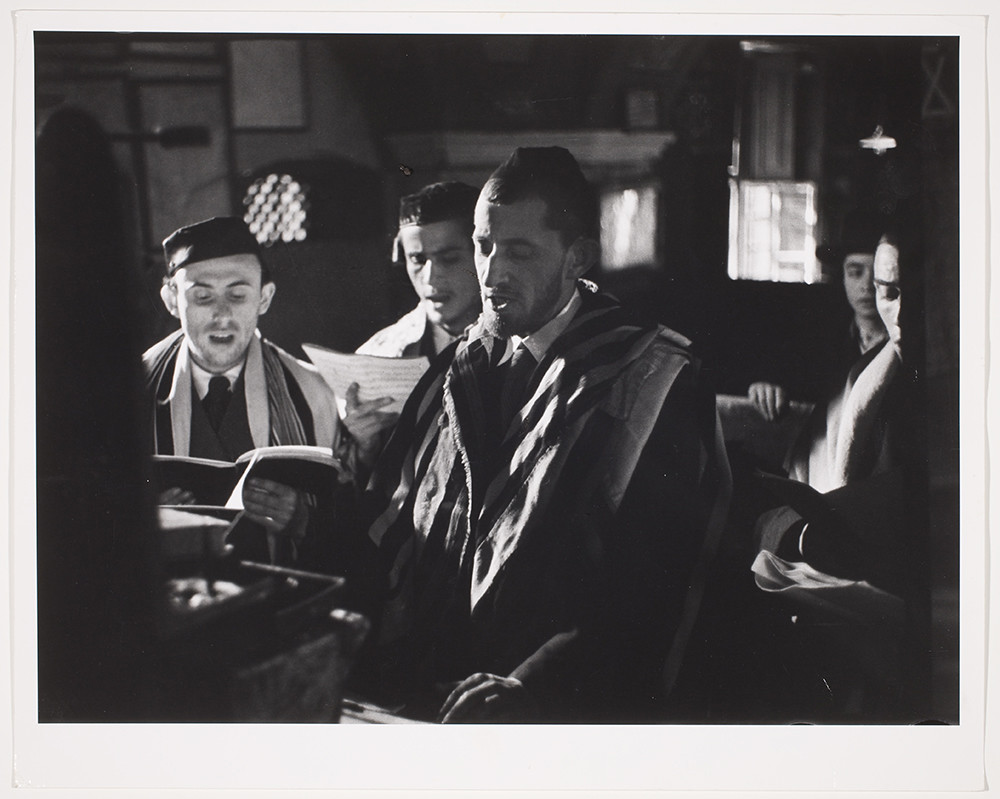
Meshorerim [choir singers] at the house of Rabbi Baruch Rabinowitz, Mukacevo, ca. 1937-38, Roman Vishniac. The Magnes Collection of Jewish Art and Life. Gift of Mara Vishniac Kohn.
First, however, the film first takes a more personal turn. Mara reveals that during this time, her parents were struggling to hold their relationship together—and that her father had begun a passionate affair with a German woman named Edith. It’s a poignant story about parents who grow apart and the toll that it takes on the children. But the way this family drama unfolds during such an extraordinarily tumultuous era gives it greater significance. Under newly passed Nazi laws, the affair becomes a criminal act. After Kristallnacht, the family strives to seek asylum elsewhere. In one of the most moving segments in a film that has no shortage of such moments, Mara discusses the Vishniacs’ efforts to emigrate to America and provides a window into how difficult it was for German Jews to leave the country at that time.
Fortunately – spoiler alert – the family made it to America, arriving in New York on New Years Eve 1940. From there, Bialis fills in the lesser-known aspects of Vishniac’s biography as he rebuilt his life and career yet again. She also chronicles his children’s entrance into adulthood.
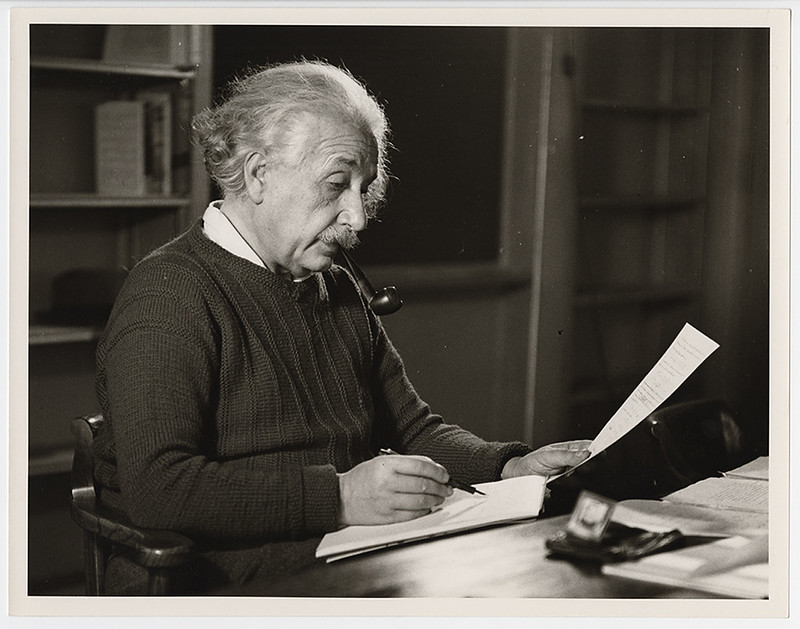
Albert Einstein in his office, Princeton University, New Jersey, 1942, Roman Vishniac. The Magnes Collection of Jewish Art and Life. Gift of Mara Vishniac Kohn.
Once settled in America, Vishniac returned to his early childhood interest in biology and photomicroscopy. He made several breakthroughs in the field of scientific photography, became a contributor to Life Magazine, and appeared in a series of short educational films that explored “the big little world of Dr. Roman Vishniac.” He also developed a close friendship with Magnum photographer and International Center of Photography founder Cornell Capa, which led to the rediscovery and renewed appreciation of his photographs of Eastern European Jewish life.
Deftly interweaving these strands into the larger story, the director tells a tale about Jewish life during the early-mid 20th Century that celebrates the value of photography. Ultimately, this absorbing documentary is a portrait of a family just as much as it is a portrait of an artist. And it makes a strong and compelling case for Vishniac’s inclusion in the canon of great 20th Century photographers.
Roman Vishniac and his daughter Mara.
Vishniac(directed by Laura Bialis). Color, 95 min., 2023.
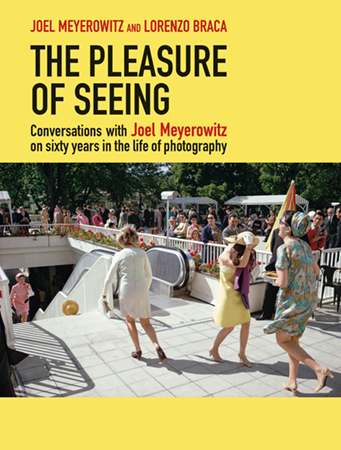
Parallax Review editor and founder Aaron M. Cohen’s review of Joel Meyerowitz’s latest book, The Pleasure of Seeing, appears in the November issue of The Brooklyn Rail. There’s also an excellent interview with Meyerowitz by Charlotte Kent in the issue.






 The Parallax Review