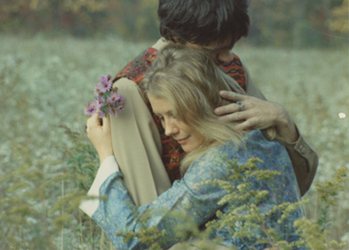
On the heels of The Little Fugitive, we take a look at Morris Engel’s long-lost, recently restored 1968 feature film, which chronicles the experiences of a free-spirited young woman immersed in the East Village counterculture scene.
Category Archives: Film
Photographers as Filmmakers #5: The Little Fugitive (Morris Engel and Ruth Orkin, 1953)
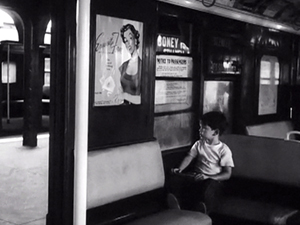
At the start of the 1950s, Photo League members Morris Engel and Ruth Orkin made a low-budget independent feature called The Little Fugitive using a small, custom-built portable movie camera. Their unassuming and charming debut as filmmakers went on to have an unexpected and considerable influence on the film world.
Photographers as Filmmakers #4: In The Street (Helen Levitt, 1948)
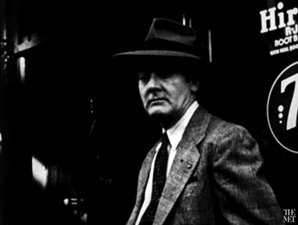
In the Street is a sensitively observed slice-of-life portrait of Spanish Harlem shot in 1948 and released in the early 1950s. Acclaimed street photographer Helen Levitt collaborated on the film with her sister-in-law, painter Janice Loeb, and author James Agee, who wrote the text for Now Let Us Praise Famous Men.
Photographers as Filmmakers #3: Gare de Lyon (William Klein, 1963)
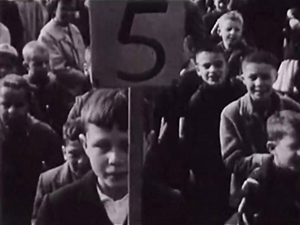
Gare de Lyon, one of WIlliam Klein’s earliest filmmaking efforts, is much more modest in ambition and scale than his later films. It’s a quick sketch made by a brilliant autodidact who is just beginning to test the limits of the medium—and a relatively simple concept executed extremely well.
Photographers as Filmmakers #2: Candy Mountain (Robert Frank, 1987)
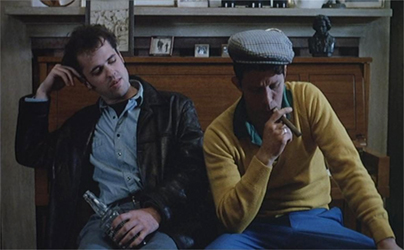
Candy Mountain, a low-budget independent feature from the mid-1980s that Robert Frank co-directed, easily ranks among his most significant filmmaking achievements. It’s a deeply personal work etched with social commentary that drives home just how much, in the wake of The Americans, Frank strove to distance himself from that career-defining body of work. It’s also his most mainstream project, and one that he ultimately deemed a failure.
Photographers as Filmmakers #1: Manhatta (Paul Strand and Charles Sheeler, 1921)
A semi-forgotten gem that MoMA cites as the first American avant-garde film, Manhatta was co-directed by Paul Strand, one of the most influential photographers of the early 20th Century. His co-director was the highly accomplished Charles Sheeler, a classically trained painter and self-taught photographer who came up with the initial concept for the film.
 The Parallax Review